Contact us on WhatsApp: +86-13913801295


When planning a new factory, warehouse, workshop, or logistics area, many people ask the same question: how to choose the right insulated door for a factory?
In actual industrial projects, some designers simply specify a rolling shutter door as the default insulated door. However, from a practical point of view, this is not always the right solution.
At MEGODOOR, we believe factory door selection should be based on the real working conditions of each project, such as:
- thermal insulation requirement
- opening frequency
- sealing performance
- dust control
- traffic efficiency
- automation demand
Choosing the wrong door at the design stage may lead to unnecessary modification costs later, as well as higher heating and cooling expenses during daily operation.
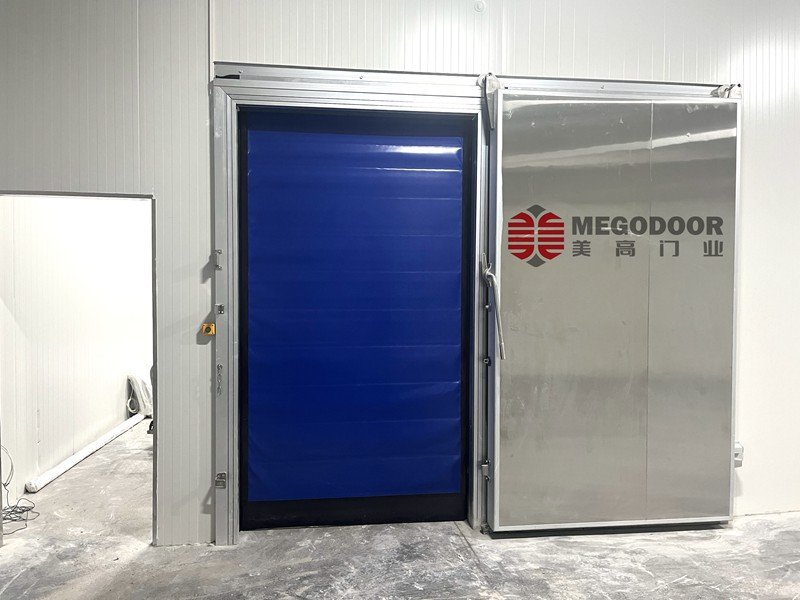
Why a Standard Rolling Shutter Door Is Usually Not Ideal as an Insulated Factory Door
Many people assume that as long as a door closes the opening, it can provide insulation. In reality, this is not the case.
A standard rolling shutter door is usually not the best option for projects that require real thermal insulation.
1. Poor thermal insulation
Most standard rolling shutter doors use thin metal slats. The door curtain itself offers very limited thermal insulation, so heat transfer happens easily between indoor and outdoor areas.
2. Limited sealing performance
Rolling shutter doors usually do not provide strong sealing around the side guides, bottom edge, and slat joints. This allows air leakage, which reduces temperature stability inside the workshop.
3. Slow opening speed
A normal rolling shutter door usually runs at about 0.1 m/s. The longer the door stays open, the more cold or warm air escapes. This directly increases energy loss.
For this reason, standard rolling shutter doors are generally not recommended for factories or workshops with insulation, dust control, or temperature control requirements.
Is a Foam-Filled Rolling Shutter Door a Good Insulated Door?
Some factories consider using a PU foam-filled rolling shutter door because it seems better than a standard shutter door.
Objectively speaking, a foam-filled shutter door can offer better insulation than a single-layer shutter door. However, compared with an insulated sectional door or a hard high speed door, its overall thermal performance is still usually weaker.
Main reasons include:
- limited panel thickness
- less effective overall sealing
- slower opening speed
- higher air exchange during door operation
So, if the project only has a basic requirement for closure and moderate insulation, a foam-filled shutter door may be acceptable. But if the factory needs better temperature control, there are usually better choices.
For Low Opening Frequency, an Insulated Sectional Door Is Often the Better Choice
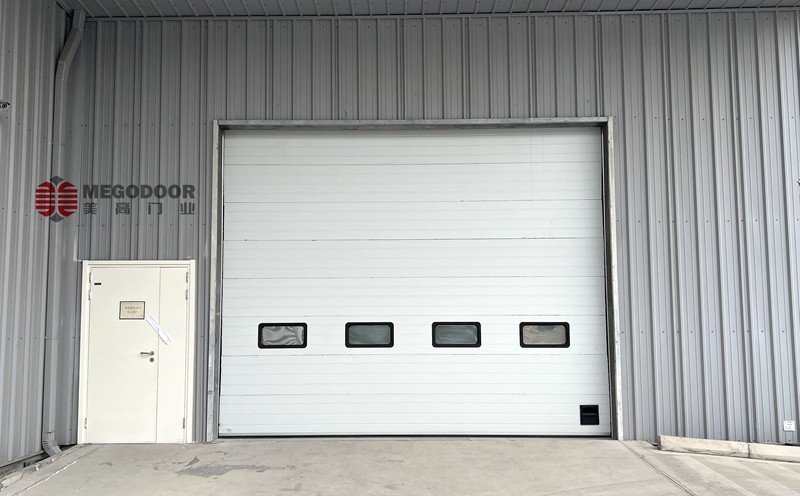
For factory buildings, storage rooms, and workshops where the door does not need to open very frequently, an insulated sectional door is usually a cost-effective solution.
1. Better panel insulation
Insulated sectional doors can be made with panel thickness such as:
- 40 mm
- 50 mm
- 60 mm
- 80 mm
Thicker insulated panels provide much better thermal performance than ordinary rolling shutters.
2. Better sealing
The top, bottom, and both sides of the door can be sealed with EPDM rubber seals, which helps reduce air leakage and improve insulation efficiency.
3. Good cost performance
If the opening frequency is low, an insulated sectional door offers a good balance between price, thermal insulation, durability, and long-term operating cost.
4. Optional pedestrian wicket door
For some workshops, people need to pass through the opening without opening the full door each time. In such cases, a sectional door can be equipped with a wicket door, which improves convenience and reduces unnecessary energy loss.
For many industrial buildings, an insulated sectional door is a practical solution when the main priority is insulation with moderate opening frequency.
For Logistics Openings and Frequent Forklift Traffic, a Hard High Speed Door Is Usually Better
If the door is installed in a logistics area, shipping opening, internal factory passage, or forklift access point, the situation is different.
In these areas, the most important requirements are often:
- fast opening and closing
- reduced waiting time
- less air exchange
- better traffic efficiency
- automatic opening
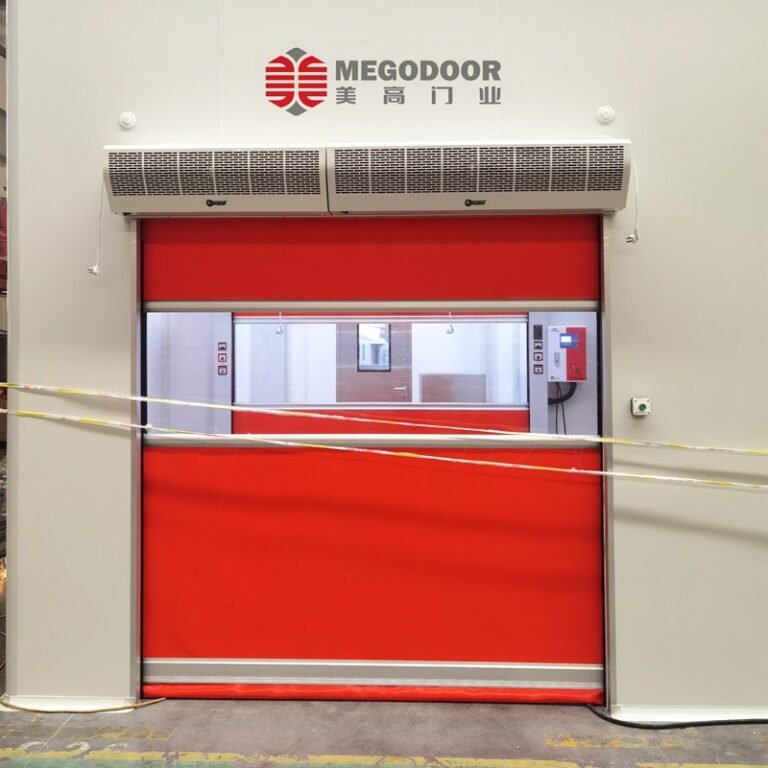
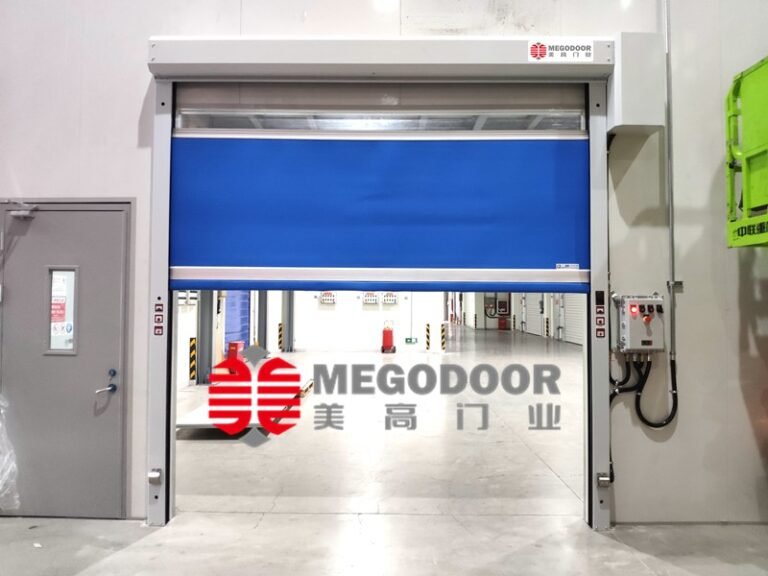
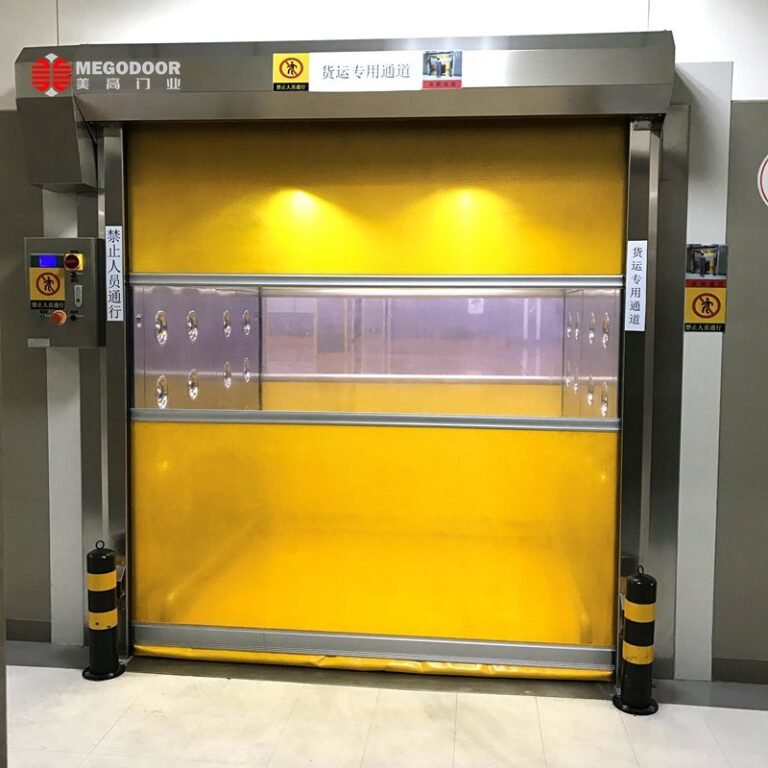
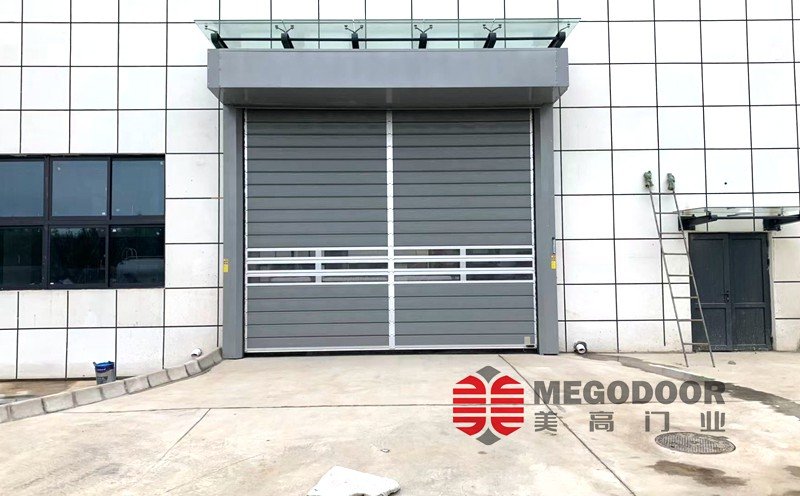
For these applications, a hard high speed door is usually a better insulated industrial door solution.
1. Fast opening speed
A hard high speed door can open at up to 1.5 m/s, while:
- a rolling shutter door is usually about 0.1 m/s
- a sectional door is usually about 0.2–0.3 m/s
The faster the door opens and closes, the less air is exchanged between indoors and outdoors, which helps save heating and cooling energy.
2. Insulated door panels
Hard high speed doors can also use insulated panels, commonly 40 mm or 50 mm, with sealing strips between the panels. This gives the door better thermal insulation and sealing than a standard rolling shutter door.
3. Automatic opening options
A hard high speed door can be equipped with:
- radar sensor
- loop detector
- remote control
- pull cord switch
- signal linkage with equipment
This is very useful for forklift passages and automated logistics systems.
4. Better for high-cycle industrial use
If the door needs to open many times per day, a hard high speed door is usually more suitable than a sectional door.
For logistics doors, warehouse traffic doors, shipping area doors, and forklift access doors, a hard high speed door is often the preferred solution.
For Constant Temperature, Dust-Controlled, or Clean Workshop Areas, Hard High Speed Doors Are Usually the First Choice
Some industrial environments have stricter requirements, such as:
- constant temperature workshops
- constant humidity workshops
- dust-controlled production areas
- electronics factories
- food processing plants
- pharmaceutical workshops
In these environments, the door must do more than just close an opening. It also needs to help reduce air movement, improve sealing, and support efficient traffic.
From MEGODOOR’s project experience, the recommended priority is:
First choice: hard high speed door
Second choice: insulated sectional door
Not recommended as first choice: standard rolling shutter door
Why hard high speed doors are preferred
Because they combine:
- fast opening speed
- better insulation performance
- better sealing structure
- automatic operation
- suitability for frequent use
This makes them more effective for maintaining indoor conditions and reducing dust entry.
Why insulated sectional doors come second
If the door does not open frequently, but the factory still needs good insulation and sealing, an insulated sectional door is also a good option.
Why standard rolling shutters are not recommended
In temperature-controlled and dust-sensitive environments, standard rolling shutters are usually not sufficient in terms of insulation, sealing, and operation speed.
Factory Insulated Door Selection Should Not Be Based Only on Purchase Price
When choosing an industrial insulated door, some buyers focus only on initial price. But in real factory operation, the total cost includes much more than the purchase price.
The wrong door can lead to:
- higher heating and cooling bills
- unstable indoor temperature
- lower logistics efficiency
- more modification cost later
- higher maintenance cost
That is why factory door selection should consider:
- insulation performance
- sealing performance
- opening speed
- traffic frequency
- automation demand
- long-term energy cost
In many cases, the right door helps reduce operating expenses far more effectively than simply choosing the cheapest one.
MEGODOOR’s Recommendation for Different Factory Applications
Based on practical industrial door applications, MEGODOOR recommends:
1. For workshops or factory openings with low opening frequency
Choose: Insulated sectional door
2. For logistics passages, forklift openings, and shipping doors
Choose: Hard high speed door
3. For constant temperature, constant humidity, or dust-controlled workshops
First choice: Hard high speed door
Second choice: Insulated sectional door
4. For general areas with low insulation requirements
A rolling shutter door may still be considered, depending on budget and actual use conditions.
So, how to choose the right insulated door for a factory?
The answer depends on the actual application. A standard rolling shutter door is not automatically a good insulated door. In many industrial projects, it offers limited thermal insulation, limited sealing, and slow operation speed.
If the door is used in a low-frequency workshop opening, an insulated sectional door is usually a cost-effective option.
If the opening is used for forklifts, logistics traffic, or frequent operation, a hard high speed door is usually a better choice.
If the factory has strict requirements for temperature control, humidity control, or dust protection, a hard high speed door is often the best solution.
At MEGODOOR, we always suggest selecting the door type based on the real needs of the factory, rather than using one standard solution for all openings. This helps reduce future renovation costs and lower long-term heating and cooling expenses.