Contact us on WhatsApp: +86 139 1380 1295 Email: kongsi@megodoor.com


Understanding the Differences Between Mechanical Dock Shelters, Foam Dock Seals, and Inflatable Dock Shelters
In modern logistics warehouses, distribution centers, cold storage facilities, and food & pharmaceutical warehouses, loading dock areas play a critical role in both operational efficiency and energy management.When a truck is parked at a loading dock, gaps inevitably exist between the vehicle and the building. Without proper sealing, rain, dust, insects, wind, and hot or cold air can enter the warehouse, affecting indoor conditions and increasing energy consumption.This is why more and more companies are investing in professional dock sealing systems. As an important part of the loading dock system, MEGODOOR offers three main types of dock seals and dock shelters:
- Mechanical Dock Shelter
- Foam Dock Seal
- Inflatable Dock Shelter
Each product is designed for different operating conditions. Understanding their differences can help you select the most suitable solution for your facility.
Mechanical Dock Shelter – Flexible and Cost-Effective
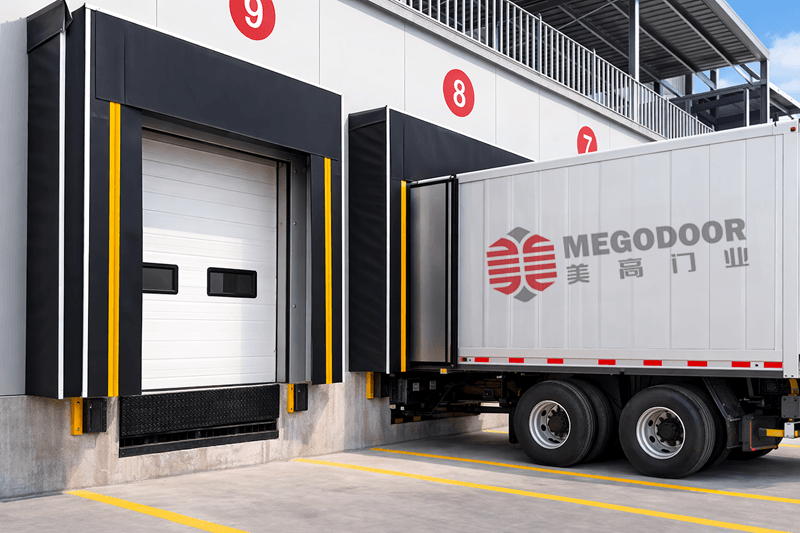
Mechanical dock shelters are among the most widely used dock sealing products in the logistics and warehousing industry.They create a protective seal by allowing the top and side curtains to make contact with the truck body, reducing the entry of wind, rain, and dust.
Key Features
- Suitable for a wide range of truck sizes
- Excellent adaptability to varying vehicle heights and widths
- Easy installation
- Low maintenance costs
- Cost-effective solution
MEGODOOR mechanical dock shelters feature a galvanized steel frame covered with durable PVC fabric. The sloped roof design helps with rainwater drainage, while the flexible frame structure can retract under accidental impact and return to its original position, reducing damage caused by improper docking.
Mechanical dock shelters are ideal for:
- Logistics warehouses
- E-commerce fulfillment centers
- Distribution hubs
- Facilities with multiple truck types
Foam Dock Seal – Better Sealing Performance
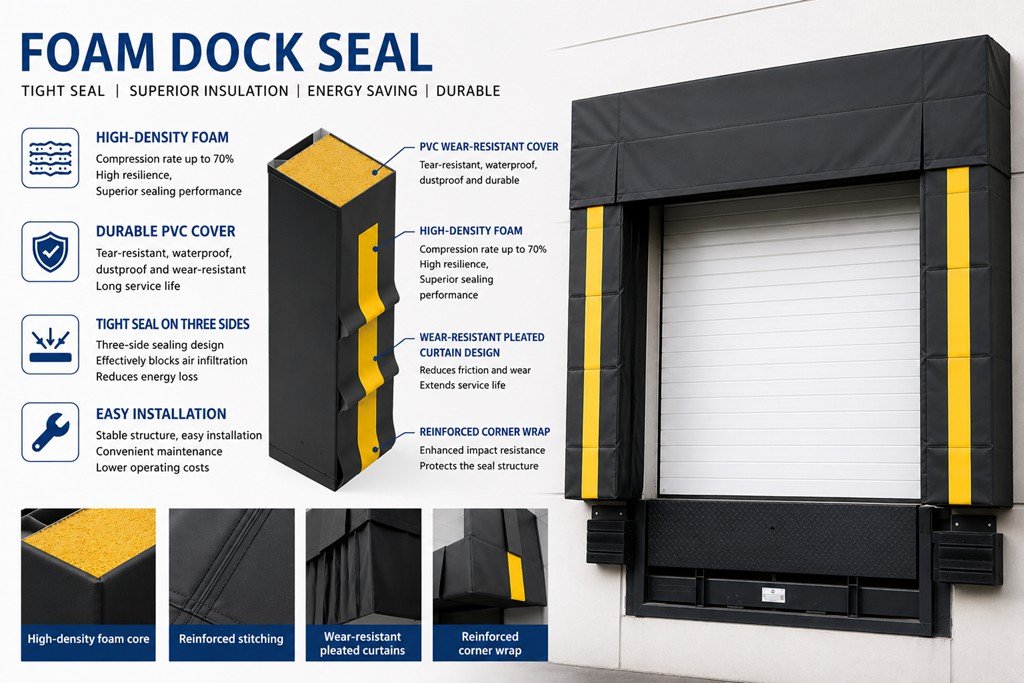
For facilities serving a fleet of trucks with similar dimensions, foam dock seals typically provide superior sealing performance.Unlike mechanical dock shelters, foam dock seals use high-density foam pads that compress directly against the rear of the truck, creating a tighter seal and minimizing air exchange.
Key Features
- Superior sealing performance
- Better thermal insulation
- Improved energy efficiency
- Ideal for uniform vehicle fleets
MEGODOOR foam dock seals are constructed with high-resilience polyurethane foam wrapped in heavy-duty PVC fabric. Wear-resistant pleated curtains further enhance durability and reduce abrasion during daily operations.
Once the vehicle is docked, the foam pads compress and form a tight three-sided seal around the truck body, effectively reducing air leakage.
Common applications include:
- Food warehouses
- Pharmaceutical warehouses
- Temperature-controlled facilities
- Automated storage systems
Because foam dock seals rely on close contact with the vehicle body, they are best suited for facilities with consistent truck dimensions.
Inflatable Dock Shelter – The Preferred Choice for Cold Storage
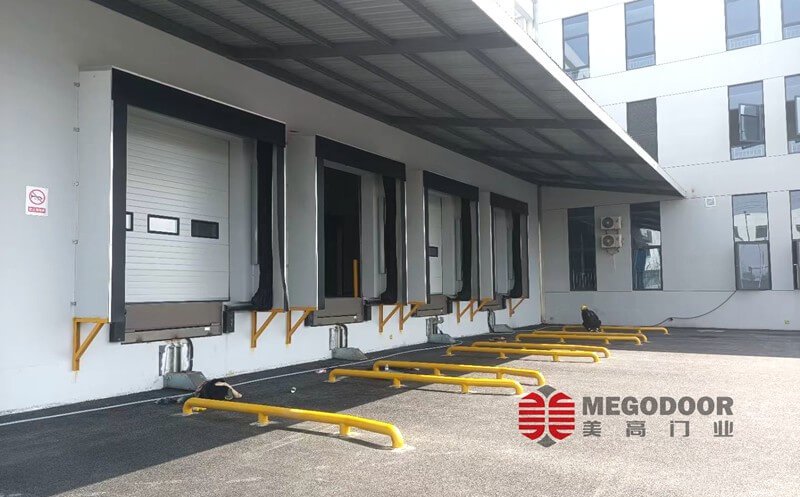
For cold storage warehouses and cold chain logistics centers, inflatable dock shelters offer one of the highest levels of sealing performance available.After the truck is positioned, the blower system inflates the side and top air bags, which automatically conform to the truck’s shape and fill the gaps between the vehicle and the building.
Key Features
- Outstanding sealing performance
- Excellent thermal insulation
- Significant reduction in energy loss
- Suitable for a wide variety of vehicle sizes
MEGODOOR inflatable dock shelters use heavy-duty PVC air cushions combined with industrial-grade blower systems. Full inflation is typically completed within 15 seconds.
The inflated cushions create a nearly airtight seal around the truck, helping maintain stable warehouse temperatures and reducing refrigeration costs.
Typical applications include:
- Cold storage warehouses
- Frozen food distribution centers
- Pharmaceutical cold rooms
- Fresh produce logistics centers
How to Choose the Right Dock Seal or Dock Shelter?
1. Consider Vehicle Size Consistency
If your facility serves trucks with varying dimensions:
Recommended:
- Mechanical Dock Shelter
- Inflatable Dock Shelter
If your facility primarily serves a dedicated fleet with consistent truck sizes:
Recommended:
- Foam Dock Seal
2. Consider Sealing Requirements
For standard logistics warehouses:
- Mechanical Dock Shelter is usually sufficient.
For food processing and pharmaceutical facilities:
- Foam Dock Seal provides improved environmental control.
For cold storage and cold chain applications:
- Inflatable Dock Shelter offers the highest sealing performance and energy efficiency.
3. Consider Building Structure
Mechanical dock shelters generally require less wall support capacity.
Foam dock seals transfer compression forces directly to the building structure and therefore require stronger wall support.
Inflatable dock shelters are typically planned as part of a complete loading dock system during the project design stage.
4. Consider Budget and Long-Term Savings
If minimizing initial investment is the primary goal:
- Mechanical Dock Shelter offers excellent value.
If balancing sealing performance and energy efficiency is important:
- Foam Dock Seal is a strong choice.
If long-term energy savings are the priority:
- Inflatable Dock Shelter provides the greatest return on investment.
MEGODOOR Complete Loading Dock Solutions
As a professional manufacturer of industrial doors and loading dock equipment, MEGODOOR provides complete loading dock solutions, including:
- Mechanical Dock Shelters
- Foam Dock Seals
- Inflatable Dock Shelters
- Hydraulic Dock Levelers
- Vehicle Restraints
- Sectional Overhead Doors
- High-Speed Doors
By integrating these systems, businesses can achieve improved sealing, thermal insulation, safety, and loading efficiency.
Choosing a dock seal or dock shelter is not simply about purchasing equipment—it is about selecting the right solution for your specific operating conditions. A properly matched system can reduce energy consumption, improve logistics efficiency, and create a safer and more comfortable working environment for years to come.