Contact us on WhatsApp: +86 13913801295 Email: kongsi@megodoor.com


When many customers choose a door for a factory building, their first idea is simply to look for a “roller shutter door.” However, factory doors are not limited to just one type. Different factories have very different application conditions, for example:
- Some factory buildings do not open and close the door very often and care more about budget
- Some factories have large openings and need better wind resistance
- Some buildings require thermal insulation to reduce heat or cold air loss
- Some workshops have frequent forklift traffic and need fast automatic opening and closing
- Some factories also require door systems to connect with AGVs, access control systems, or other equipment
So, when choosing a recommended roller shutter door for factory use, price alone should not be the only factor. The more practical way is to consider opening size, traffic frequency, environment, and functional requirements. Based on Megodoor’s experience in industrial door projects, factory door selection can usually be divided into several categories according to budget and performance needs.
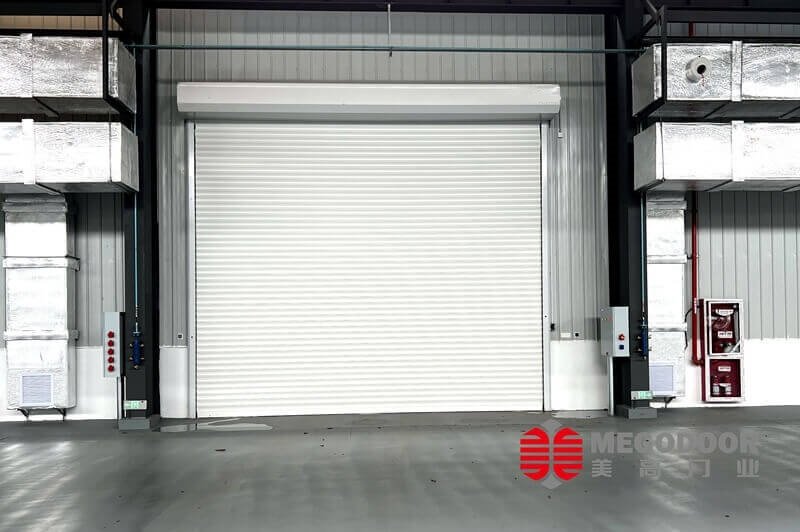
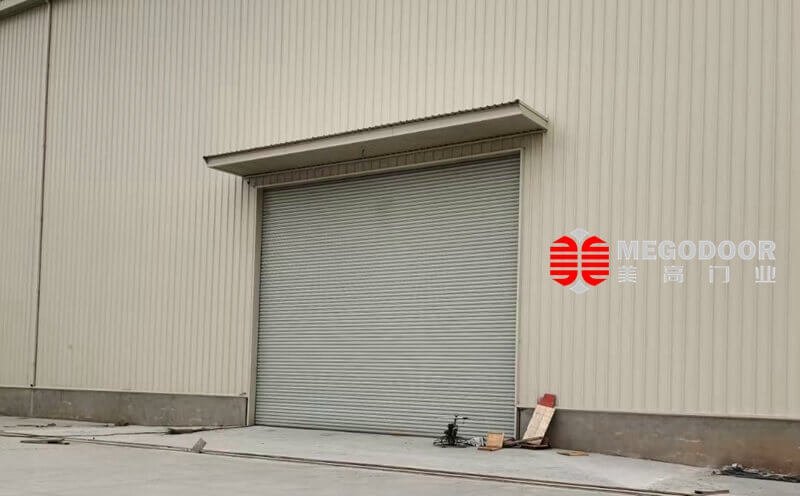
1. If Your Budget Is Limited, Steel Roller Shutter Doors Are Usually a More Economical Choice
If the customer mainly cares about purchase cost and wants a door with a relatively simple structure for general factory use, then a steel roller shutter door is often a practical solution.
Where Are Steel Roller Shutter Doors Suitable?
Steel roller shutter doors are commonly suitable for:
- Exterior doors of general industrial buildings
- Warehouses with relatively low opening frequency
- Workshop entrances without strong insulation requirements
- Projects that focus on basic protection and budget control
Features of Steel Roller Shutter Doors
The main advantages of steel roller shutter doors include:
- Common materials and relatively economical overall cost
- Mature structure suitable for standard factory installation
- Customizable according to opening size
- A practical basic electric door solution for factory buildings
If a customer asks, “What is the most affordable factory door option?” then in many industrial applications, steel roller shutter doors are usually among the more cost-effective choices. However, it should also be noted that they are better suited for basic access needs. If there are higher requirements for sealing, thermal insulation, opening speed, or wind resistance, other door types may be more appropriate.
2. If Appearance and Lightweight Design Matter, Aluminum Roller Shutter Doors Can Be Considered
In addition to steel doors, aluminum roller shutter doors are also commonly used in factory buildings. Compared with steel roller shutter doors, aluminum models often provide a cleaner appearance, lighter curtain weight, and better corrosion resistance, making them suitable for customers who pay more attention to door appearance and long-term durability.
Suitable Applications for Aluminum Roller Shutter Doors
Aluminum roller shutter doors are often used in:
- Exterior openings of factory buildings
- Industrial parks with better appearance requirements
- Entrances where the door system is part of the overall building image
- Some internal and external access points
Features of Aluminum Roller Shutter Doors
- Lighter door curtain and relatively smooth operation
- Cleaner and more modern appearance
- Customizable colors, sizes, and some control options
- Better visual effect than many standard steel shutter doors
If the customer wants to control cost while also improving the appearance of the factory entrance, then an aluminum roller shutter door can be a worthwhile option.
3. If Wind Resistance, Insulation, and Sealing Are Important, Industrial Sectional Doors Are Usually Recommended
Many customers start by searching only for a “roller shutter door,” but after installation and actual use, they realize that factory doors involve much more than just opening and closing. Common issues include:
- Poor wind resistance in windy areas
- Insufficient thermal insulation in cold or hot climates
- Large gaps around the door and weak sealing
- Higher energy loss from air conditioning or heating
- Dust and insects entering through door gaps
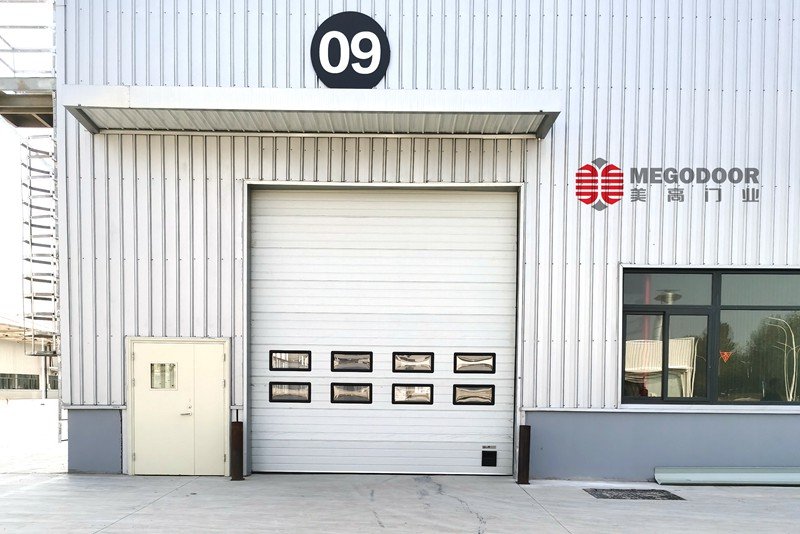
If the building clearly requires wind resistance, thermal insulation, and sealing performance, then from a long-term application perspective, an industrial sectional door is often a more suitable choice.
Why Are Industrial Sectional Doors Better for Insulated Factory Buildings?
Industrial sectional doors usually use insulated sandwich panels. Common panel thickness options include 40 mm, 50 mm, 60 mm, and 80 mm. The door panels are generally filled with polyurethane foam, and the door perimeter is usually equipped with sealing strips. Compared with standard roller shutter doors, this type of door offers clearer advantages in the following aspects:
- Better thermal insulation
- Improved overall sealing
- More stable wind resistance
- More suitable for larger factory openings
Where Are Industrial Sectional Doors Suitable?
- Factory buildings with heating or air conditioning requirements
- Workshops that need better dust control and sealing
- Large exterior openings with wind load requirements
- Logistics buildings, machinery workshops, electronics factories, and similar sites
So, if a customer is looking for the best factory door with wind resistance, insulation, and sealing, then compared with standard roller shutter doors, industrial sectional doors are usually the preferred solution.
4. For High Traffic Frequency, PVC High Speed Doors or Hard High Speed Roll Up Doors Are Better Choices
In many modern factories, doors are not just barriers. They also directly affect operating efficiency. Typical examples include:
- Frequent forklift traffic
- Constant worker movement
- AGV automatic traffic
- Fast separation between workshop and warehouse areas
- Long door opening times that affect cleanliness, temperature control, or insect prevention
For these types of applications, standard roller shutter doors and sectional doors may still work, but because their opening speed is usually slower, they are not always the most efficient choice. For factory areas with high traffic frequency, PVC high speed doors or hard high speed roll up doors are generally more suitable.
1. PVC High Speed Doors
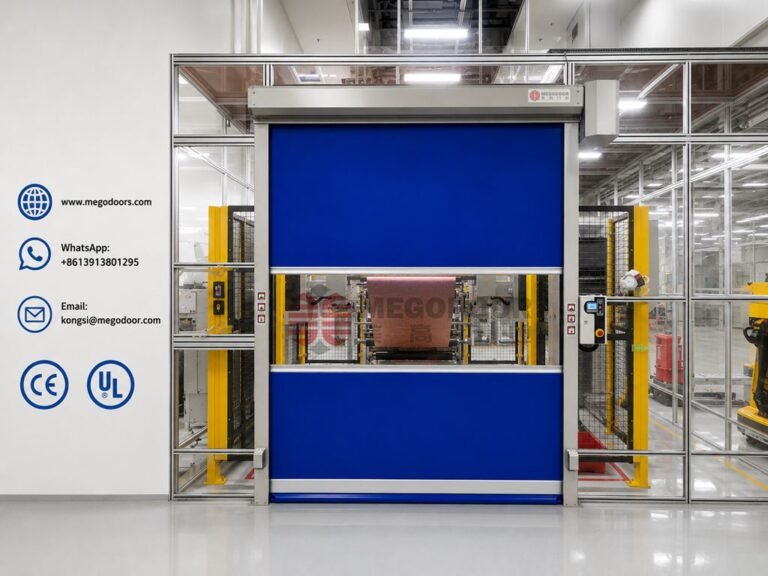
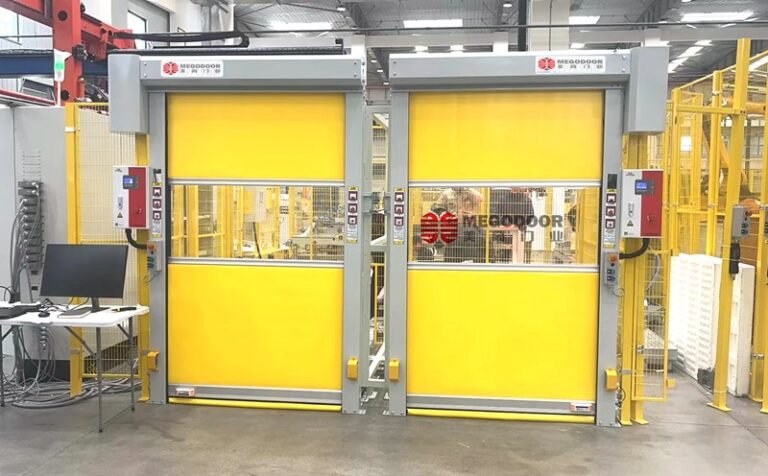
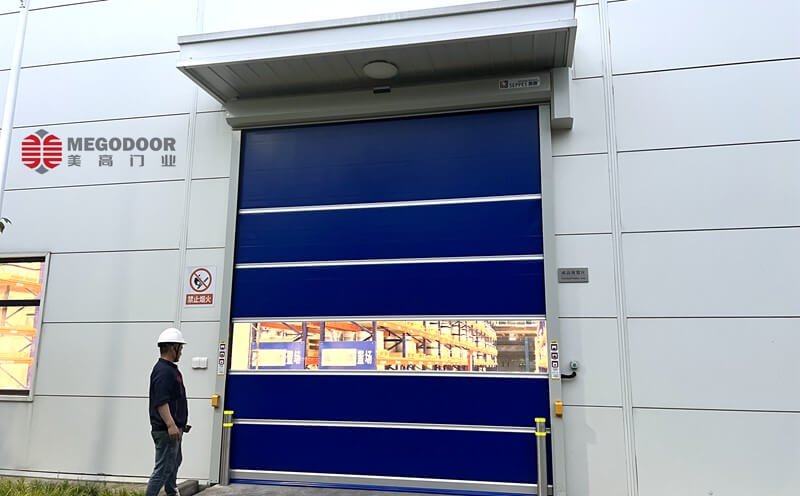
PVC high speed doors are suitable for interior passages, cleanrooms, food workshops, electronics workshops, logistics sorting areas, and similar applications. Their main features include:
- Fast opening and closing speed
- Can be equipped with radar, loop detector, pull cord, push button, and other activation methods
- Helps reduce air loss
- Suitable for frequent traffic and automatic opening applications
- Can be connected with equipment systems, AGVs, and access control systems
For areas with frequent movement of workers or forklifts, PVC high speed doors can help improve traffic efficiency and support better environmental control inside the workshop.
2. Hard High Speed Roll Up Doors
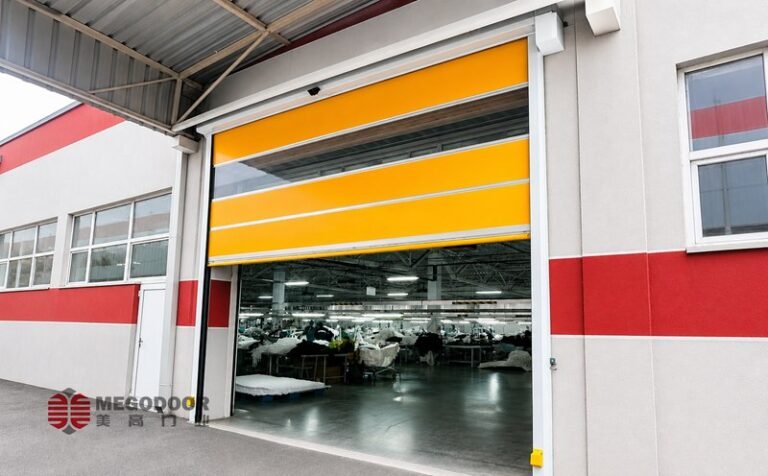
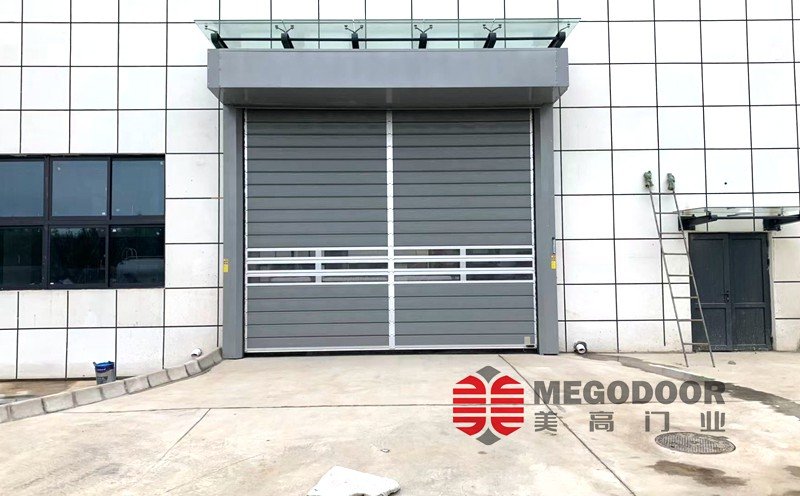
If the customer wants both fast operation and better door strength, with a certain level of insulation performance, then a hard high speed roll up door is usually more suitable. It is commonly used for:
- Exterior factory doors
- Logistics loading and unloading areas
- Areas that require both wind resistance and higher opening speed
- Openings that need to balance insulation and high usage frequency
Advantages of Hard High Speed Roll Up Doors
- Fast opening and closing for higher traffic efficiency
- Stronger door panel structure
- Suitable for frequent use
- Can be used in some exterior openings with insulation and wind resistance requirements
Therefore, when customers ask, “What kind of door is better for a factory with frequent traffic?” the answer is often PVC high speed doors or hard high speed roll up doors.
5. Megodoor’s Suggestion: Do Not Choose a Factory Door Based on Price Alone
In actual projects, some customers initially look only for “the cheapest door,” but after using it for some time, they start to realize that factors such as operating frequency, maintenance convenience, sealing, insulation, and automation compatibility are equally important.
Based on Megodoor’s project experience, a more practical factory door selection logic is usually:
- Budget first: consider steel roller shutter doors
- Better appearance and lighter structure: consider aluminum roller shutter doors
- Focus on wind resistance, insulation, and sealing: industrial sectional doors are usually a better fit
- High traffic frequency and efficiency-oriented use: PVC high speed doors or hard high speed roll up doors are more suitable
Choosing the right door type from the beginning can often reduce unnecessary modification and maintenance costs later.
6. Megodoor Can Provide Multiple Industrial Door Solutions for Factory Buildings
As a supplier focused on industrial door solutions, Megodoor can provide different door options according to the actual needs of factory projects, including:
- Steel roller shutter doors
- Aluminum roller shutter doors
- Industrial sectional doors
- PVC high speed doors
- Hard high speed roll up doors
At the same time, door size, color, control system, activation method, and equipment linkage can also be adjusted according to project requirements, helping the door system better match the real application environment of the factory.
When discussing recommended roller shutter doors for factory buildings, there is no single door type that fits every project. For budget-sensitive applications, steel roller shutter doors are often one of the more economical choices. If a lighter and cleaner-looking door is preferred, aluminum roller shutter doors may be a better option. If the building has strong requirements for wind resistance, thermal insulation, and sealing, then industrial sectional doors are usually more suitable. For workshops or passages with frequent forklift, worker, or AGV traffic, PVC high speed doors and hard high speed roll up doors are often the better match for modern factory use.
If you are selecting doors for a new factory, renovating an old building, upgrading a logistics passage, or separating workshop areas, it is better to choose the door type based on actual working conditions rather than price alone. A suitable industrial door can improve daily use efficiency and reduce later adjustment costs.