Contact us on WhatsApp: +86 13913801295 Email: kongsi@megodoor.com

Vertical Lift Sectional Door

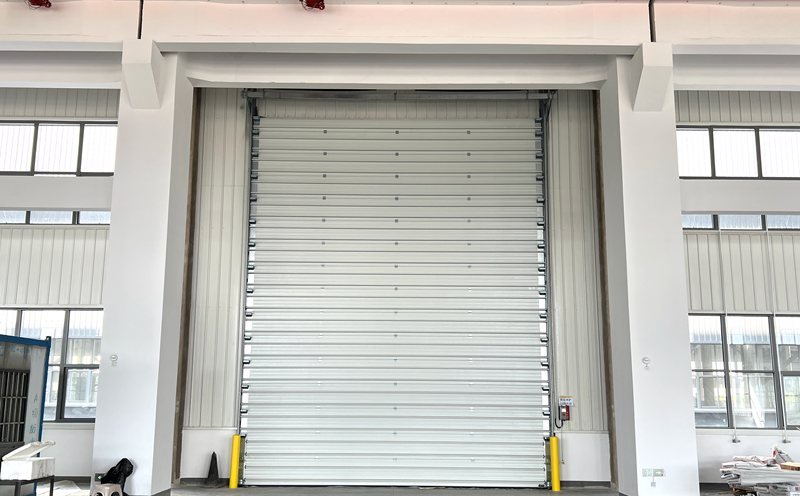
A vertical lift door is a specialized type of industrial sectional door designed for buildings with sufficient space above the doorway. Unlike a standard sectional door that turns horizontally beneath the ceiling, a vertical lift door moves straight upward along the interior wall.This opening method makes full use of the building’s vertical space while keeping the ceiling area clear. It is particularly suitable for high-bay factories, warehouses, logistics centers, equipment rooms, aircraft hangars, vehicle workshops, and other industrial buildings with high door openings.Megodoor provides customized vertical lift sectional doors according to the door-opening dimensions, building height, installation conditions, operating frequency, wind-load requirements, and automation needs.
How Does a Vertical Lift Door Work?
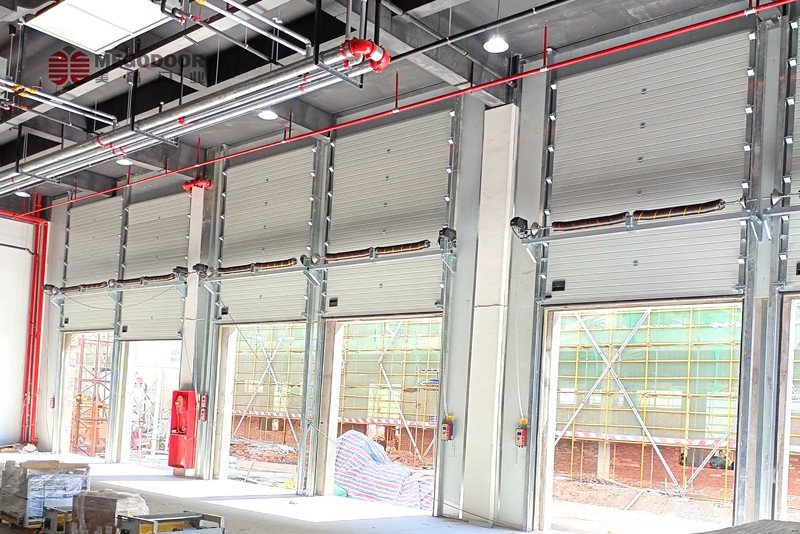
The door consists of multiple insulated sectional panels connected by hinges. When the door opens, the panels move vertically upward along tracks installed on both sides of the opening.A spring balance system or counterweight system balances the weight of the door panels, reducing the load on the motor and allowing the door to operate smoothly. Rollers installed on both sides of the panels guide the door along the vertical tracks.Because the door does not turn horizontally beneath the roof, it avoids occupying valuable ceiling space. This makes it suitable for factories where overhead cranes, ventilation ducts, lighting systems, pipelines, production equipment, or storage racks are installed close to the ceiling.
Smooth and Reliable Operation
One of the main advantages of a vertical lift door is its stable operating performance.
During opening and closing, the rollers move vertically inside the guide tracks. The balanced door structure helps distribute the load evenly, reducing unnecessary vibration and resistance.
High-quality rollers, hinges, tracks, bearings, cables, and balance components help the door operate smoothly, even when the door opening is relatively large.
The guide system can also include anti-derailment structures to help prevent the rollers from leaving the tracks during operation. Combined with correct installation and regular maintenance, this design improves the reliability and service life of the complete door system.
For industrial facilities requiring frequent access, the drive system can be selected according to the door size, weight, and daily operating cycles.
Efficient Use of Building Space
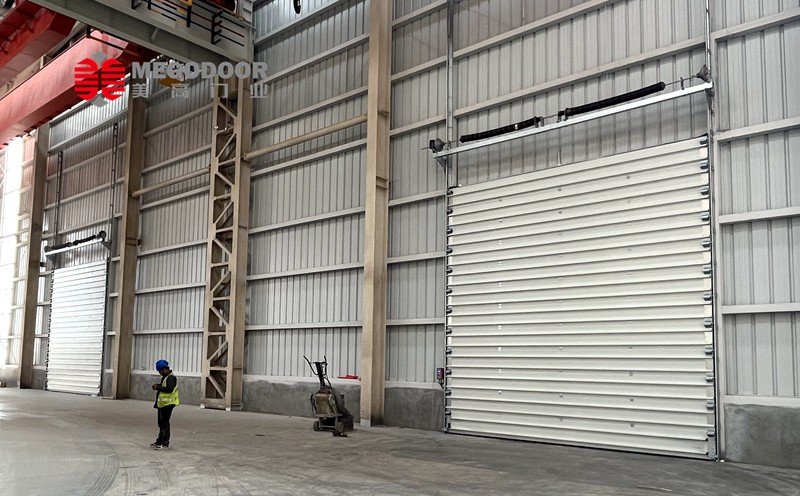
Vertical lift sectional doors are designed for buildings with sufficient headroom above the door opening. The door panels move upward along the wall instead of extending horizontally into the building.
This structure provides several space-saving benefits:
- It keeps the ceiling area clear.
- It avoids interference with overhead cranes and lifting equipment.
- It does not occupy valuable space in front of or behind the doorway.
- It reduces conflicts with lighting, pipelines, ventilation ducts, and storage systems.
- It allows production and logistics areas to remain more organized.
The main fixing points are generally concentrated around the vertical tracks, brackets, spring system, and drive structure. When the wall and building structure meet the installation requirements, the system can be arranged without complex horizontal tracks beneath the roof.
Before production, the wall strength, headroom, side clearance, lintel structure, and upper installation space should be carefully measured.
Excellent Sealing and Insulation Performance
Megodoor vertical lift doors can be manufactured with insulated sectional panels. The panels normally consist of double-layer steel or aluminum sheets with polyurethane foam injected into the center.
Different panel thicknesses can be selected according to the application and insulation requirements.
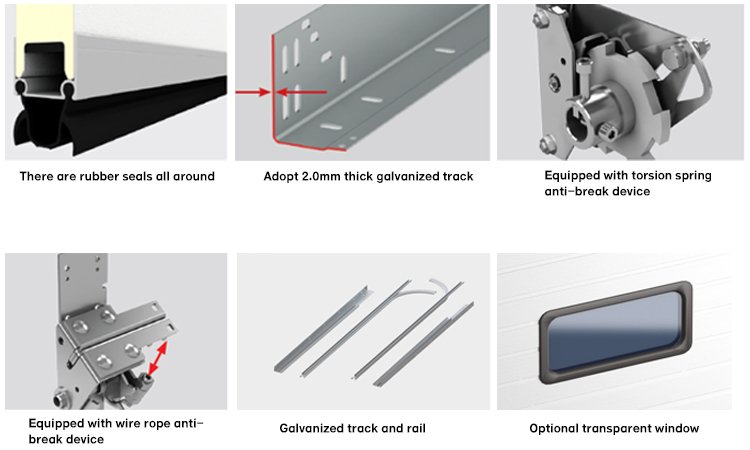
Sealing strips are installed between the door panels, around the frame, and along the bottom edge. When the door is fully closed, the sealing system helps reduce the entry of:
- Dust
- Wind
- Rainwater
- Insects
- Outdoor noise
- Hot or cold air
This makes vertical lift doors suitable for factories, warehouses, food processing facilities, pharmaceutical plants, temperature-controlled workshops, and other environments that require improved cleanliness or indoor temperature control.Good sealing and thermal insulation also help reduce unnecessary air-conditioning or heating loss, improving the overall energy efficiency of the building.
Low-Noise Operation
The rollers, tracks, hinges, cables, and balance system are designed to work together smoothly. Compared with poorly balanced industrial doors, a correctly installed vertical lift door produces less vibration and impact during operation.
The use of suitable rollers, stable guide rails, quality bearings, and a precisely adjusted spring or counterweight system can further reduce operating noise.
This is particularly useful for factories with office areas nearby or facilities that operate during both daytime and nighttime.
Modern Appearance and Customized Design
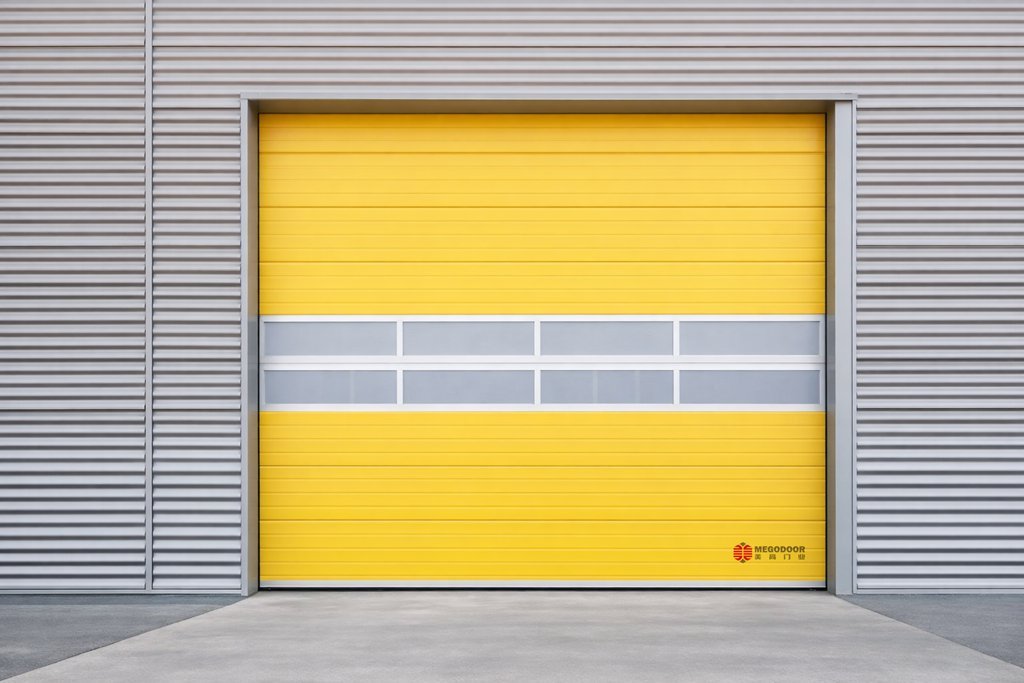
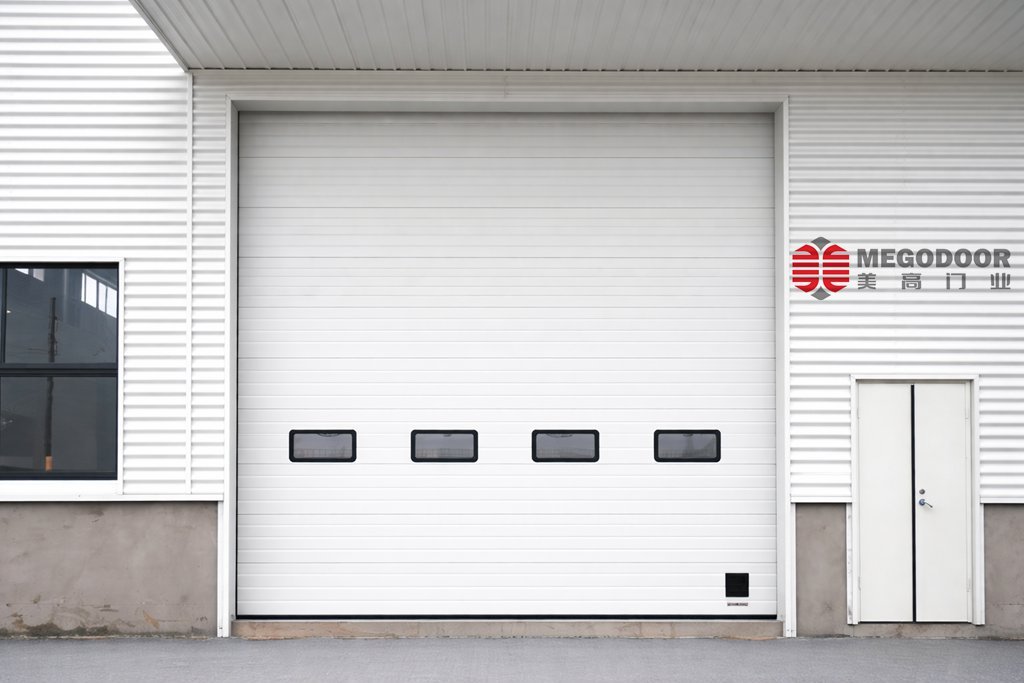
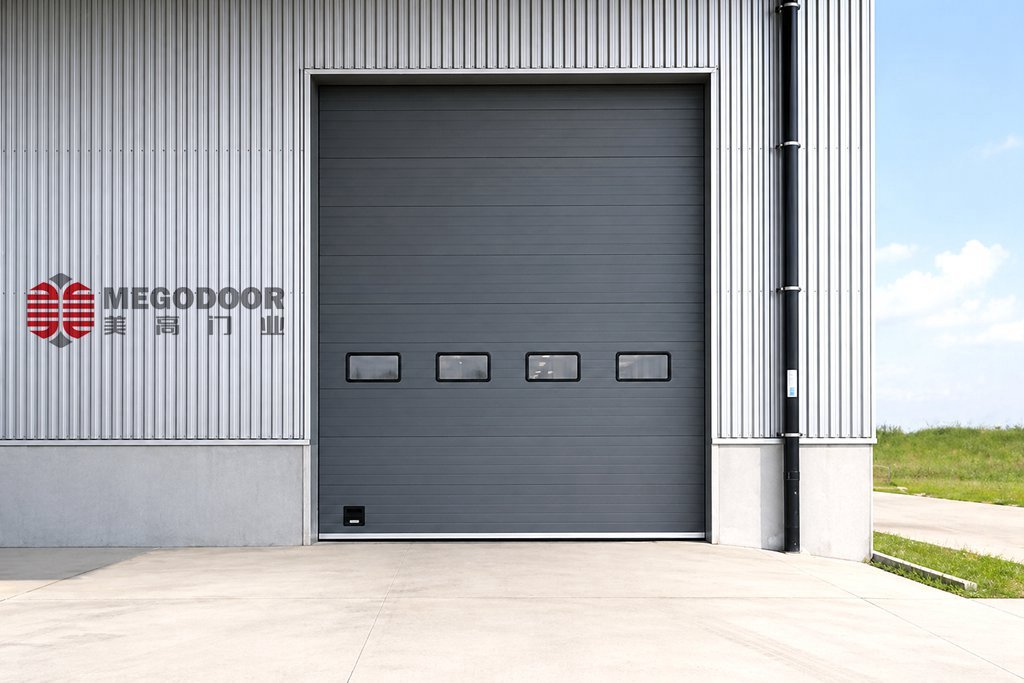
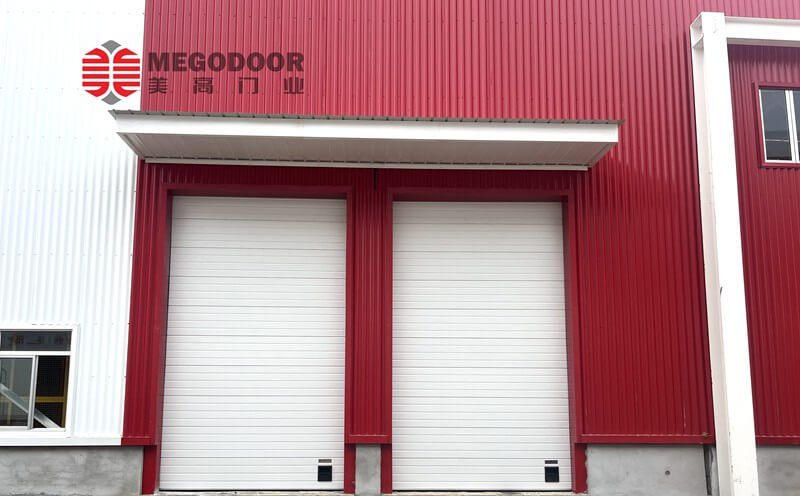
Vertical lift sectional doors provide a clean and modern industrial appearance. The panel surface, color, window arrangement, and overall configuration can be customized to match the building façade or the customer’s corporate design.
Available customization options can include:
- Steel or aluminum door panels
- Different insulation thicknesses
- Standard or customized RAL colors
- Rectangular or oval vision windows
- Full-width glazed sections
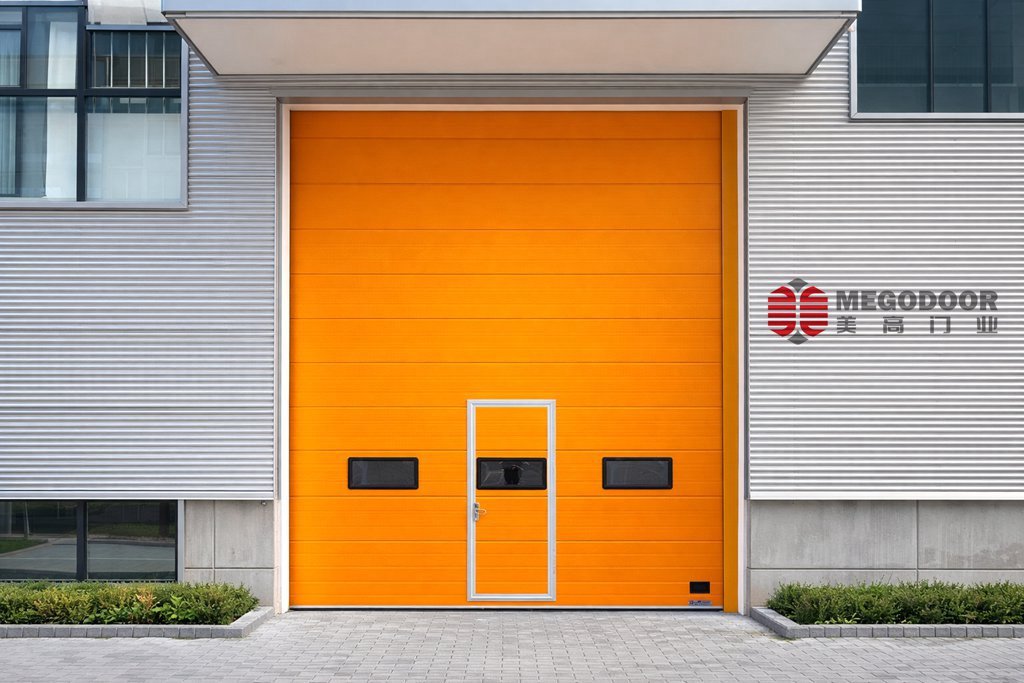
- Built-in personnel doors
- Stainless-steel hardware
- Corrosion-resistant components
- Company logos or identification markings
Vision windows can improve natural lighting and allow employees to observe vehicles or personnel on the opposite side of the door.
A built-in pass door can also be added when personnel need to enter and exit frequently without opening the complete industrial door.
Multiple Safety Protection Devices
Industrial doors must operate safely around employees, forklifts, vehicles, and production equipment. Megodoor vertical lift doors can be equipped with multiple safety devices according to the project requirements.
Available safety options include:
- Spring-break protection
- Cable-break protection
- Bottom safety edge
- Infrared photoelectric sensors
- Safety light curtain
- Motor overload protection
- Emergency stop button
- Emergency manual operation
- Pass-door safety interlock
- Warning light and audible alarm
The spring-break and cable-break protection devices help prevent the door from falling unexpectedly if an important balance component fails.
When the bottom safety edge or photoelectric sensor detects an obstacle, the control system can stop or reverse the door. This reduces the risk of collision with personnel, vehicles, or goods.
When a built-in pass door is included, a safety switch can prevent the main door from operating while the pass door is open.
Energy-Efficient Electric Drive System
The balanced structure of a vertical lift door reduces the force required to raise and lower the door. This helps lower the operating load on the motor and improves the efficiency of the drive system.
The door can be equipped with an industrial motor or servo control system according to the operating frequency and automation requirements.
A servo control system can provide smooth acceleration, stable operation, accurate position control, and adjustable opening and closing speeds. It can also reduce sudden mechanical impact during startup and stopping.
Combined with insulated door panels and perimeter seals, the vertical lift door helps reduce heat transfer and indoor energy loss.
Automation and Equipment Integration
Vertical lift doors can be integrated with factory automation, access-control, logistics, and production systems.
Different activation methods are available, including:
- Push-button control
- Remote control
- Pull-cord switch
- Radar sensor
- Vehicle loop detector
- Access-control system
- License-plate recognition
- Timer control
- Automatic closing
- Central control system
For intelligent manufacturing and automated warehouse projects, the door can communicate with AGVs, conveyors, production machines, fire-control systems, or warehouse management systems.
Available communication methods can include I/O signals, RS485 communication, opening and closing position feedback, and customized control interfaces.
The door can open automatically when a vehicle or production signal is detected and close after the passage is clear. This improves logistics efficiency while reducing unnecessary manual operation.
Typical Applications
Megodoor vertical lift sectional doors are commonly used in:
- High-bay industrial factories
- Logistics warehouses
- Automobile manufacturing plants
- Heavy-equipment workshops
- Aircraft and vehicle maintenance facilities
- Fire stations
- Food processing factories
- Pharmaceutical plants
- Temperature-controlled workshops
- Loading and unloading areas
- Equipment rooms
- Buildings with overhead cranes
They are especially suitable for projects where there is considerable space above the doorway but limited space beneath the ceiling.
Customized Vertical Lift Doors from Megodoor
Every industrial building has different structural and operational requirements. Megodoor designs vertical lift doors according to the actual site conditions rather than relying on a single standard configuration.
Customers can provide the following information for technical evaluation:
- Door-opening width and height
- Available headroom
- Side installation clearance
- Indoor building height
- Wall and lintel structure
- Required panel thickness
- Operating frequency
- Local power supply
- Wind-load requirements
- Required safety and automation functions
Based on this information, Megodoor can recommend a suitable panel structure, track layout, balance system, motor, control system, safety devices, and automation solution.
With smooth operation, efficient space utilization, reliable sealing, good thermal insulation, multiple safety protections, and flexible automated control, the vertical lift sectional door is a practical solution for modern industrial buildings.
It helps improve traffic efficiency, maintain a cleaner working environment, reduce energy loss, and make better use of high-level building space.