Contact us on WhatsApp: +86 13913801295 Email: kongsi@megodoor.com

n food processing plants, beverage factories, central kitchens, fresh food packaging workshops, and seasoning production facilities, maintaining a clean production environment is extremely important. During summer, mosquitoes and flying insects can easily enter production areas through loading docks, logistics channels, and workshop entrances, affecting hygiene management and increasing food safety risks.
For this reason, more and more food factories are adopting a combined solution of high speed roll up doors + interlocking door systems + air curtains to improve insect prevention and clean area isolation.
Why Are Food Factories Prone to Mosquito and Insect Problems?
Food-grade factories usually have the following characteristics:
- Comfortable indoor temperatures
- Bright lighting
- Food odors or sweet smells
- Frequent logistics traffic
- Doors opening frequently
Especially at shipping areas, raw material entrances, and forklift passages, traditional rolling shutters or swing doors often remain open for long periods, which can cause:
- Flying insects entering the workshop
- Dust contamination
- Loss of cold air from air conditioning
- Pressure imbalance inside clean areas
As a result, food factories now require industrial doors with better sealing performance, faster opening speed, and intelligent linkage control.
Common Insect Prevention Solution for Food Factories: High Speed Roll Up Doors
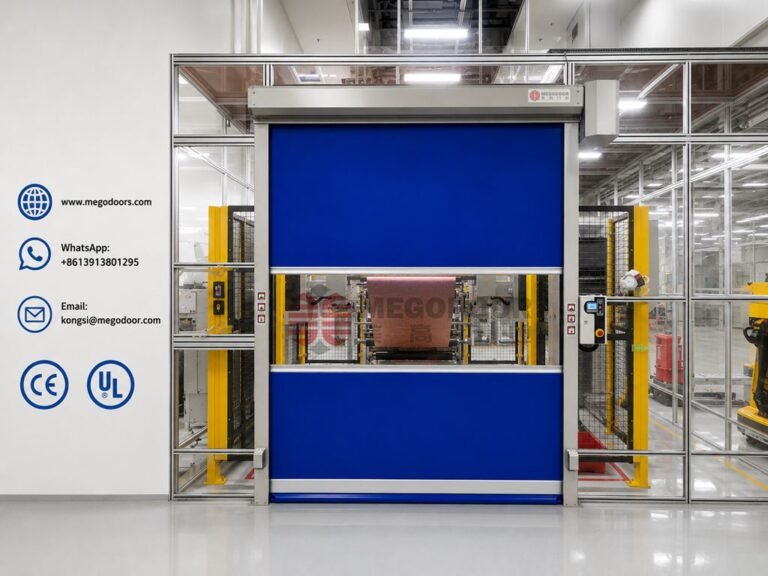
Compared with traditional rolling shutters, PVC high speed roll up doors provide faster operation and better sealing performance, making them suitable for high-frequency logistics channels in food factories.
Advantages of High Speed Roll Up Doors
1. Fast Opening and Closing to Reduce Insect Entry Time
High speed doors usually operate at speeds of 0.8–1.5 m/s. After forklifts or personnel pass through, the door closes automatically and quickly, significantly reducing the time the doorway remains open.
This is especially suitable for logistics channels with frequent forklift traffic.
2. Better Sealing Performance
The door curtain sides can be equipped with brush seals or zipper sealing structures to help reduce the entry of insects and dust.
At the same time, the door also helps reduce air conditioning loss and maintain stable workshop temperatures.
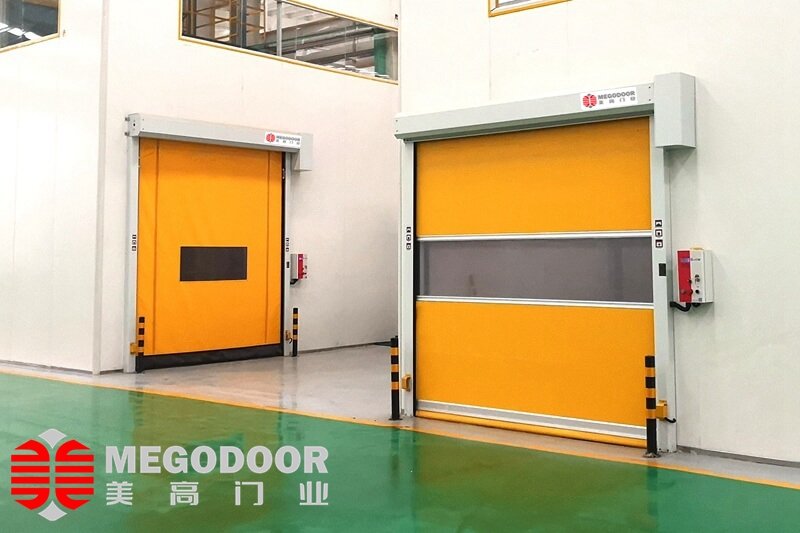
3. Yellow Door Curtains Help Reduce Insect Attraction
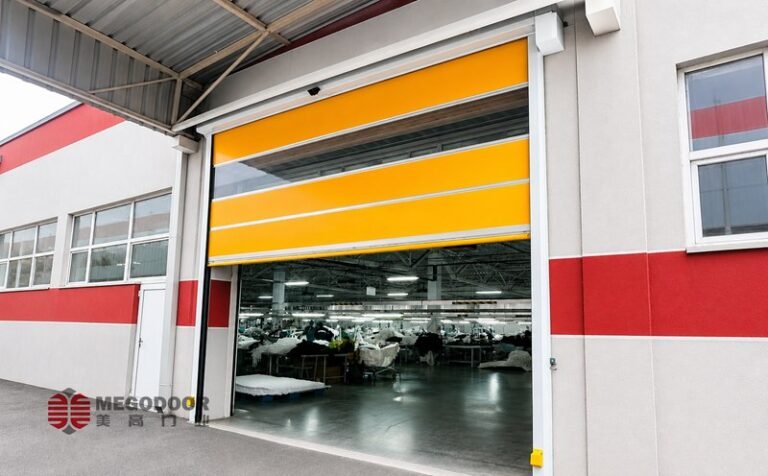
Many food factories choose yellow PVC door curtains.
Some flying insects are less sensitive to yellow colors, which may help reduce insect gathering near the entrance. In addition, yellow curtains improve visibility and safety warnings for forklift traffic.
Interlocking Door Systems for Clean Workshops
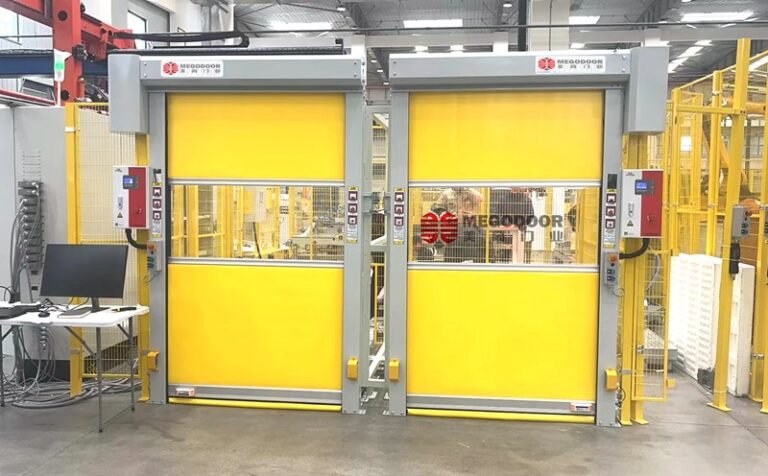
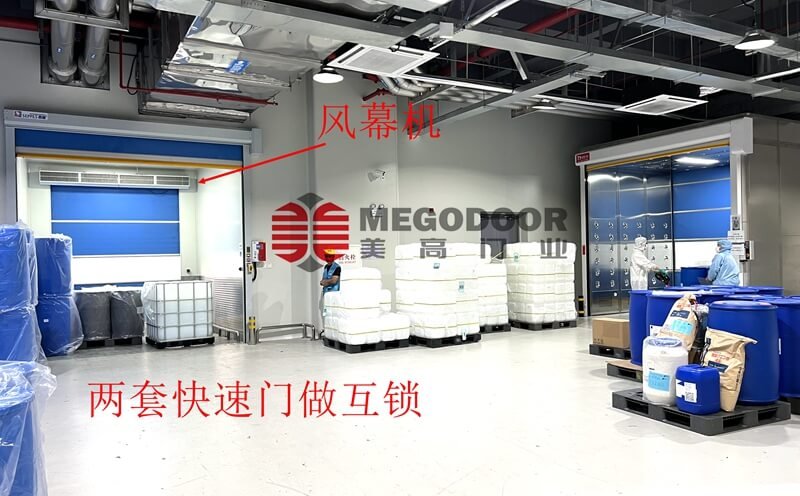
In areas with higher cleanliness requirements, many food factories use double-door interlocking systems.
For example:
- One high speed door installed at the outer logistics passage
- Another high speed door installed at the inner clean workshop entrance
The two doors are electronically interlocked:
- If the first door is not fully closed
- The second door cannot open
This creates an air isolation buffer zone, helping reduce the direct entry of insects and dust into clean production areas.
Interlocking door systems are widely used in:
- Food packaging workshops
- Beverage filling rooms
- Bakery production areas
- Fresh food processing areas
- Pharmaceutical and food cleanrooms
Air Curtain Linkage with High Speed Doors
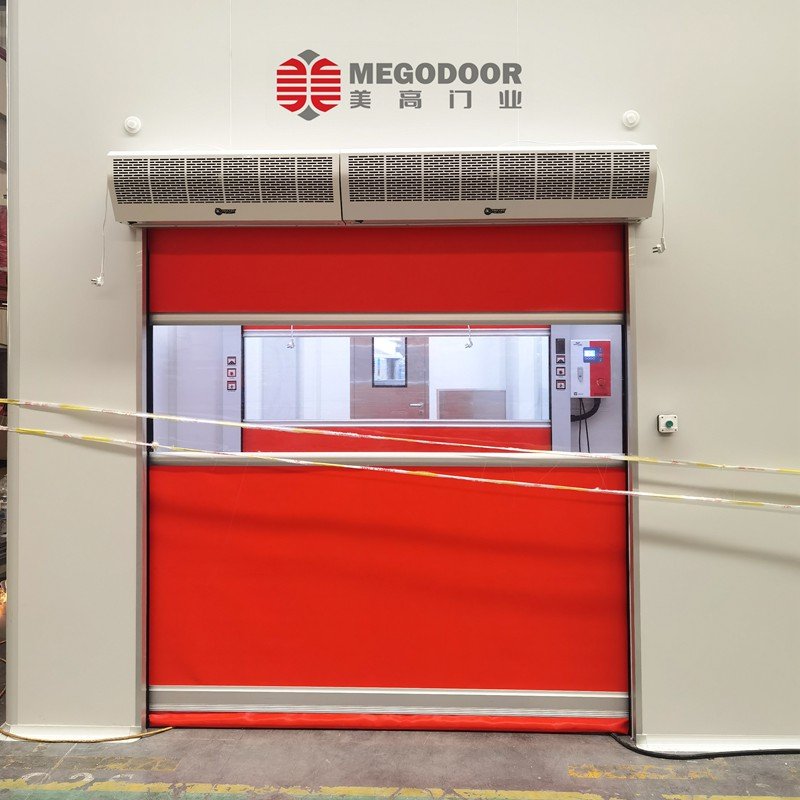
In addition to high speed doors, many food factories install industrial air curtains near entrances.
When operating, the air curtain creates a high-speed airflow barrier that helps block insects from entering.
A common solution is:
Air Curtain and High Speed Door Linkage
When the high speed door opens:
- The air curtain automatically starts
- After the door closes, the air curtain stops with a delay
This not only improves insect prevention efficiency but also helps reduce energy consumption.
During hot summer conditions, air curtains also help reduce hot and cold air exchange, improving energy-saving performance.
Installing Mosquito Killer Lamps Near Entrances
Besides door isolation systems, many food factories also install mosquito killer lamps near loading areas and entrances.
Common methods include:
- Installing mosquito killer lamps outside the doorway
- Adding insect attraction lamps in loading areas
- Continuous insect trapping during nighttime operation
The combination of:
- High speed door isolation
- Air curtain protection
- Mosquito killer lamps
can effectively reduce flying insects entering the workshop.
MegoDoor Food Factory Insect Prevention Door Solutions
As an industrial door and clean area isolation solution provider, Nanjing MegoDoor Industrial Doors Co., Ltd. can provide customized solutions for food factories, including:
- PVC high speed roll up doors
- Yellow curtain high speed doors
- Interlocking door control systems
- Air curtain linkage systems
- Pedestrian and vehicle separation sensors
- Radar and ground loop automatic opening
- Cleanroom interlocking systems
- Dustproof and insect prevention solutions
These solutions are widely used in:
- Food processing plants
- Beverage factories
- Cold storage warehouses
- Central kitchens
- Fresh food packaging workshops
- Seasoning factories
- Pharmaceutical cleanrooms
For food-grade factories, mosquito and insect prevention is not only a hygiene management issue but also an important part of product quality control and workshop management.
The combination of:
- High speed roll up doors
- Interlocking door systems
- Air curtain linkage
- Mosquito killer lamps
can effectively improve workshop cleanliness while maintaining logistics efficiency and energy savings.
If you are planning entrances for food factories, beverage plants, or clean workshops, MegoDoor can provide suitable industrial door and insect prevention isolation solutions.