Contact us on WhatsApp: +86 13913801295 Email: kongsi@megodoor.com


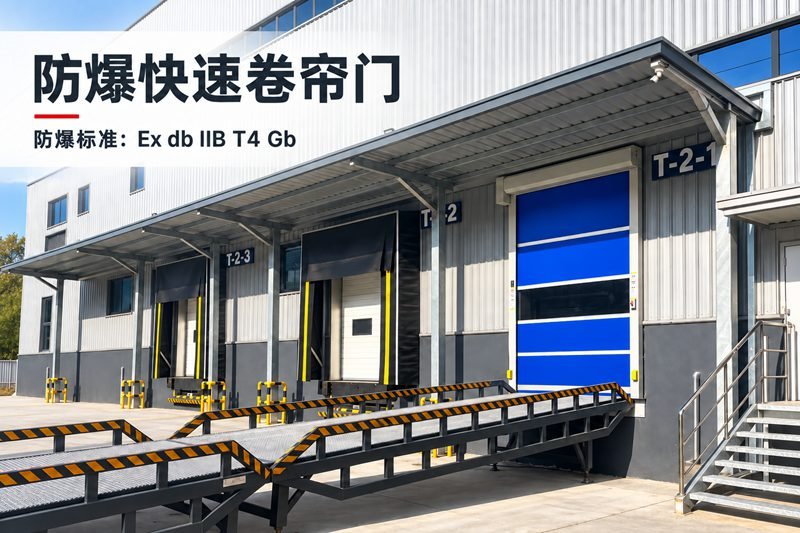
When renovating an older chemical plant, access points often need to support efficient material handling, separation between production areas, and explosion protection. Explosion-proof high-speed roll-up doors are therefore an option for many facilities. However, products sold under the same name can differ considerably in price and configuration.
What accounts for these differences? Beyond door dimensions, buyers need to examine the curtain, motor, control panel, photoelectric sensors, encoder, wiring, and installation methods. An explosion-proof motor alone does not establish that the complete door system is suitable for the hazardous area.
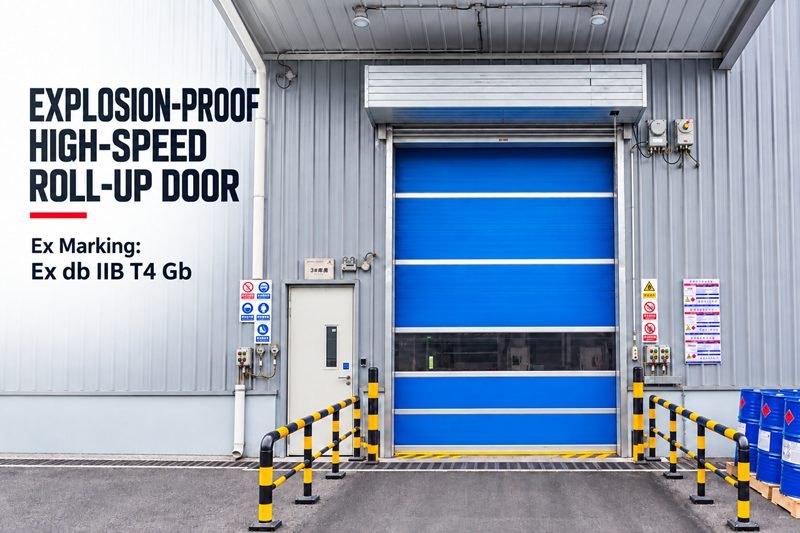
High-speed roll-up doors are custom-built industrial products whose configurations must reflect project requirements. Custom construction does not remove the need to meet applicable explosion-protection requirements. Nanjing MEGODOOR recommends defining the configuration and checking the supporting documentation before comparing prices.
Define the operating environment before selecting components
For an older plant renovation, ordering a replacement based solely on the existing door dimensions is not enough. The project designer or qualified personnel should first establish the hazardous area classification, gases or dusts present, temperature requirements, and required equipment protection level.
For example, where a project specifies “Ex db IIB T4 Gb,” the suitability of the relevant components must be checked. Areas containing combustible dust also require a separate assessment of dust explosion protection. A gas explosion-protection marking cannot simply substitute for the required dust protection.
Check whether the curtain actually provides anti-static performance
Buyers often focus on the motor while paying less attention to the curtain material. Standard PVC curtains and anti-static curtains may look similar in color and thickness. Appearance and verbal assurances alone are insufficient to establish their properties.
MEGODOOR explosion-proof high-speed roll-up doors use anti-static curtains with conductive material incorporated into the curtain itself. Buyers should also check the test methods, conditions, and results stated in the material’s test report and confirm its suitability for the intended application.
Curtain material, door grounding, and installation must be considered together. An anti-static curtain alone does not establish the explosion-protection performance of the complete door.
Examine the complete control panel configuration
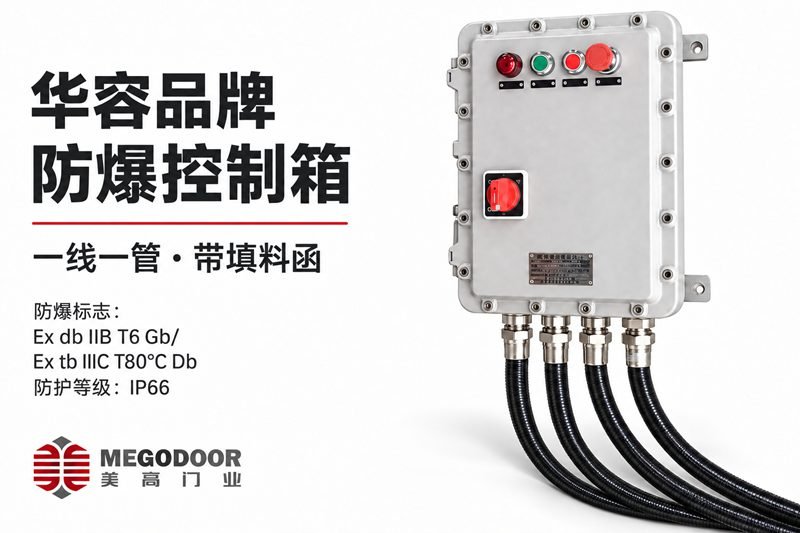
MEGODOOR offers Huarong explosion-proof control panels. Depending on the project design, wiring can use individual conduit runs for each cable, with cable glands selected to match the cable type, entry interface, and explosion-protection requirements. Where armored cables are used, suitable armor-clamping arrangements are provided.

These details affect sealing, cable retention, and maintenance at cable entries. Buyers should look beyond enclosure thickness and appearance to check the complete panel configuration, nameplate, certificates, and wiring drawings. Documentation for an empty enclosure alone is insufficient to establish the suitability of the assembled control panel.
Individual conduit routing is a project configuration choice and must remain consistent with the installation design and equipment requirements.
Check photoelectric sensors and isolation barriers as a matched circuit
Photoelectric sensors support passage detection and protection against closing-door hazards. They are another component that requires attention during selection.
MEGODOOR can use photoelectric sensors from the US brand Banner that are suitable for the specified hazardous area, together with matching isolation barriers where required by the sensor model and protection concept.
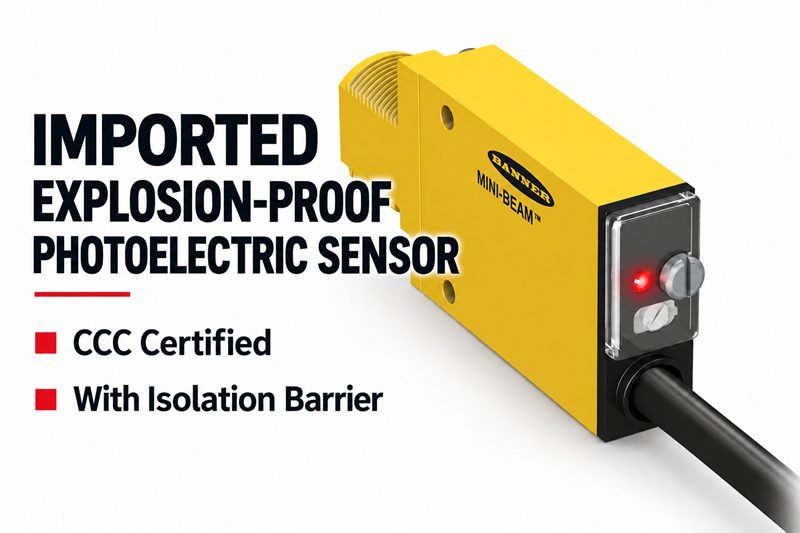
For intrinsically safe arrangements, the sensor, barrier, and wiring parameters must be checked together. Adding an isolation barrier to an ordinary sensor does not automatically make the combination suitable for hazardous-area use.
The brand is one consideration; the exact model and circuit compatibility are essential.
Do not overlook the encoder
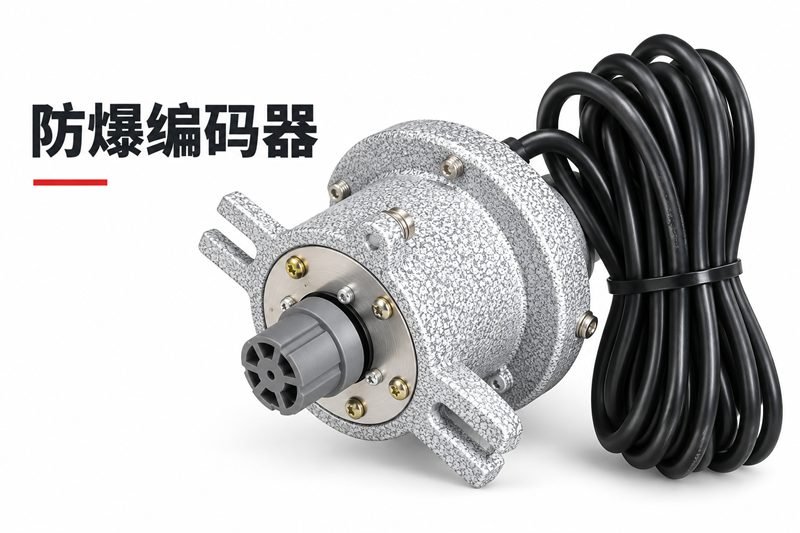
The encoder provides door-position feedback and can easily be overlooked when comparing quotations. MEGODOOR uses explosion-proof encoders in the corresponding door configurations, taking account of installation location, interfaces, and wiring requirements.
If an encoder is installed within a hazardous area, its suitability or the complete protective arrangement must be verified. Checking only the motor and control panel does not establish that the remaining electrical components are appropriate.
Put renovation requirements into the purchasing specification
Before selecting a door, provide the clear opening dimensions, available installation space, power supply, operating frequency, environmental conditions, and explosion-protection design requirements. Existing wiring, grounding, and wall penetrations should also be assessed for continued use.
The purchase specification should identify the curtain material, motor and control panel models, sensors and isolation barriers, encoder, conduits, and cable-entry devices. It should also define the required certificates, wiring diagrams, installation instructions, and maintenance documentation.
MEGODOOR focuses on the complete configuration and installation details of explosion-proof high-speed roll-up doors. From anti-static curtains to electrical controls, sensing components, and wiring arrangements, each solution is tailored to project conditions. Clearly specified components, documented parameters, and verifiable installation details provide a stronger basis for both new chemical plant projects and existing facility renovations.