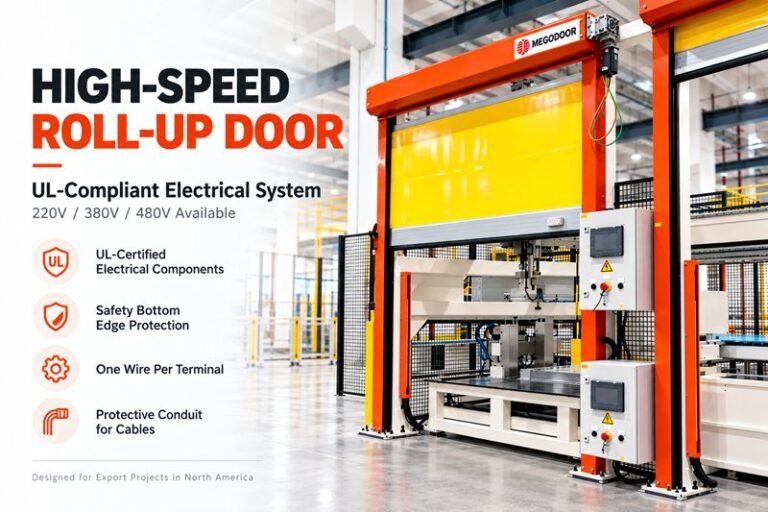
Contact us on WhatsApp: +86 13913801295 Email: kongsi@megodoor.com


With the development of industrial automation, high speed doors have become widely used in food processing, pharmaceutical manufacturing, automotive production, logistics and warehousing, electronics factories, and automated equipment applications.
China has numerous high speed door manufacturers, with differences in product types, structural designs, electrical control systems, and manufacturing processes. Different operating environments also have specific requirements for sealing performance, wind resistance, thermal insulation, and equipment integration.
Nanjing MEGODOOR Co., Ltd. (MEGODOOR) draws on 15 years of industrial high speed door manufacturing and domestic and international project experience to introduce five common types of high speed doors available in China, along with important considerations for industrial buyers.
1. Five Common Types of Industrial High Speed Doors
1.1 PVC High Speed Doors: Ideal for Indoor Applications Without Significant Wind Pressure
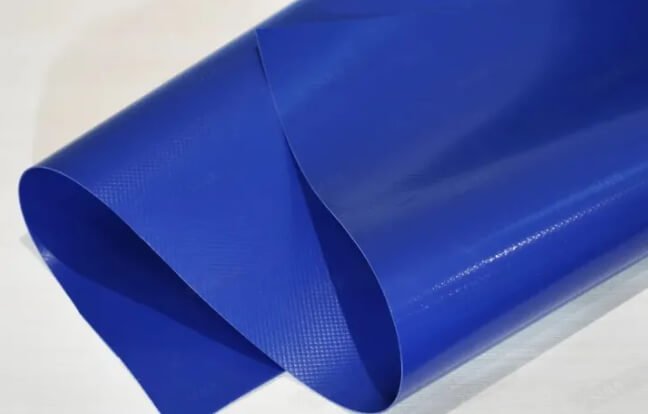
PVC high speed doors, also known as PVC High Speed Roll Up Doors, are widely used in industrial facilities. They typically feature flexible PVC curtains, servo motor drive systems, and automatic controls, allowing frequent and rapid opening and closing.

Main Features:
- PVC curtains typically range from 0.8 to 1.2 mm in thickness, with additional thickness options available.
- Standard operating speeds are approximately 0.8–1.2 m/s, with higher speeds available for certain configurations.
- Multiple activation options, including radar sensors, induction loops, pull cords, push buttons, and infrared sensors.
- Optional infrared safety photocells and safety edges.
- Supports signal integration with PLC systems, AGVs, and automated production equipment.
Recommended Applications: Indoor production workshops, warehouse passages, machine enclosures, and personnel or material access points.
Selection Advice: For indoor installations with minimal wind pressure and no special thermal insulation or cleanroom sealing requirements, standard PVC high speed doors are generally a practical and cost-effective choice.
However, standard PVC high speed doors are not suitable for every outdoor application. Where significant wind pressure or continuous crosswinds exist, doors with appropriate wind-resistant designs should be selected based on actual operating conditions.
1.2 Spiral High Speed Doors: Suitable for Outdoor Applications Requiring Wind Resistance
Spiral high speed doors, also known as High Speed Rigid Doors or Spiral High Speed Doors, feature rigid insulated panels, specialized guide tracks, and high speed drive systems. They combine rapid operation with thermal insulation and wind resistance.
Compared with flexible PVC high speed doors, spiral doors offer greater structural rigidity, making them suitable for external industrial entrances and locations exposed to wind pressure.

Main Features:
- Commonly equipped with 40 mm thick polyurethane-insulated panels, with other thicknesses available depending on the product configuration.
- Aluminum alloy or other suitable rigid panel structures.
- Specialized spiral track systems and high speed motor drives.
- Wind-resistant structures can be designed according to project requirements.
- Supports automatic activation, safety protection, and equipment integration.

Recommended Applications: External factory entrances, logistics warehouses, automotive manufacturing facilities, and industrial environments requiring both thermal insulation and wind resistance.
Selection Advice: For industrial entrances located outdoors or exposed to wind pressure, spiral high speed doors are generally worth considering as a priority, especially when thermal insulation is also required.
It is important to understand that panel thickness alone does not determine the wind resistance rating. Actual performance depends on door dimensions, guide track design, panel connections, and installation conditions. Wind resistance claims should be supported by relevant engineering specifications and test documentation.
1.3 High Speed Aluminum Roller Shutters: Recommended for Smaller Industrial Openings
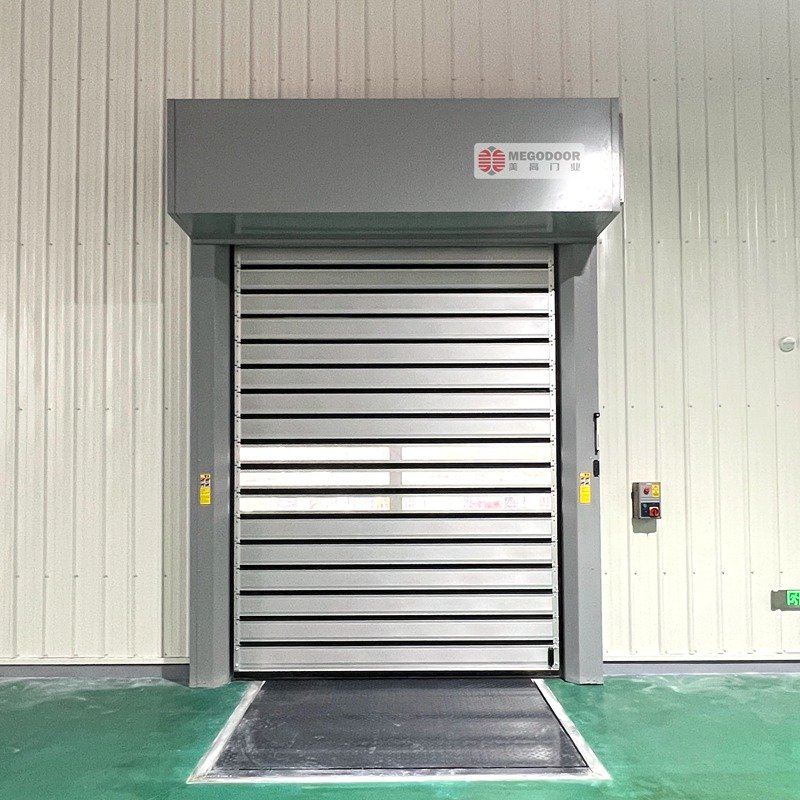
High speed aluminum roller shutters are typically developed by combining a conventional aluminum roller shutter structure with a high speed motor and compatible control system.
Unlike spiral high speed doors with dedicated spiral tracks, aluminum roller shutters use a different mechanical structure and drive arrangement, resulting in different performance characteristics and applications.
Main Features:
- Aluminum alloy roller shutter slats.
- Optional high speed motor drive systems.
- Suitable for certain smaller industrial openings.
- Relatively compact door structure.
- Automatic control options available according to project requirements.
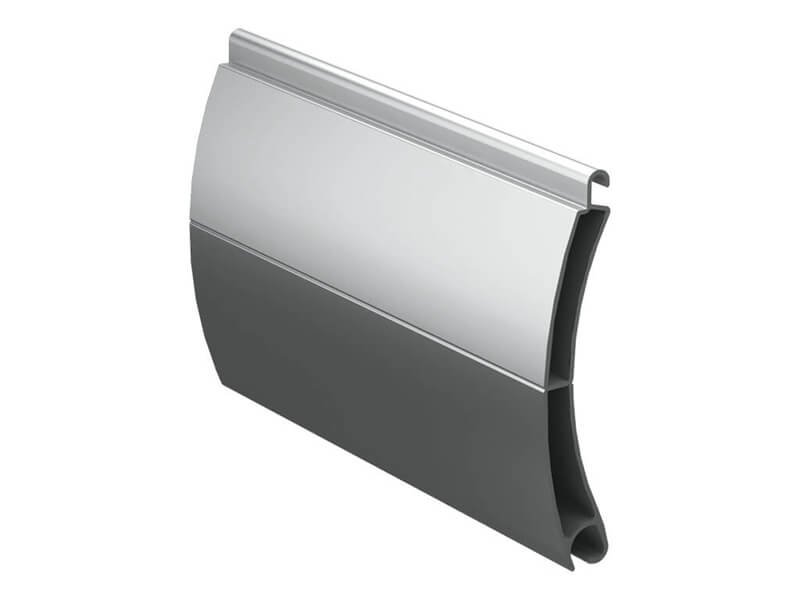
Selection Advice: MEGODOOR generally recommends this type of high speed aluminum roller shutter for door openings smaller than 10 m², subject to further evaluation of door weight, operating speed, and opening frequency.
For larger aluminum roller shutters, increased curtain weight and operating inertia place higher demands on motor torque, braking performance, transmission components, and control systems.
Simply replacing a standard motor with a faster motor, without upgrading the door structure and control system, may result in motor overload, increased mechanical wear, unstable operation, and a higher risk of failure.
Therefore, conventional aluminum roller shutters equipped with high speed motors should not be selected for large industrial openings without a proper engineering assessment.
1.4 Insulated PVC High Speed Doors: Suitable for Temperature-Controlled Workshops Around 10–20°C
Insulated PVC high speed doors are primarily designed for indoor industrial environments requiring temperature control.
MEGODOOR offers double-layer PVC insulated curtains with thermal insulation materials, such as reflective aluminum foil insulation, between the two PVC layers to help reduce heat transfer when the door is closed.
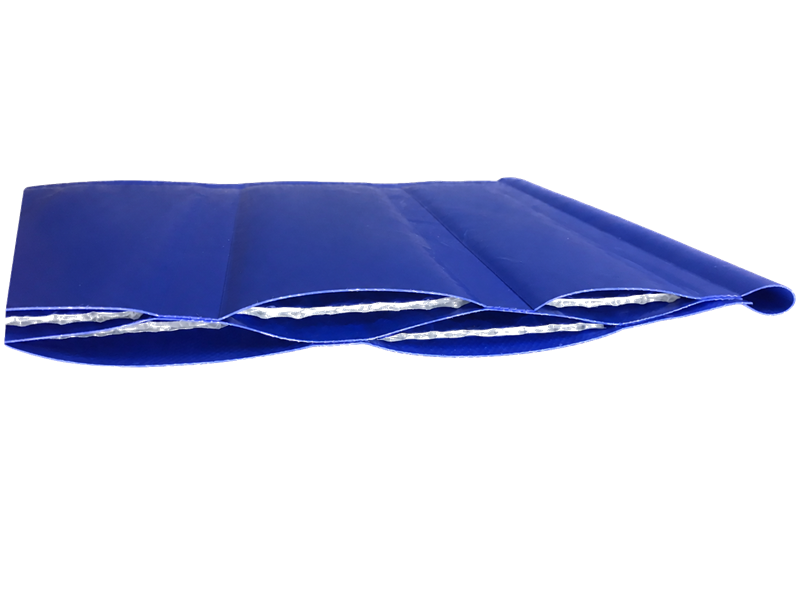
Main Features:
- Double-layer PVC curtain construction.
- Optional aluminum foil insulation or other thermal insulation materials between the layers.
- Rapid opening and closing to reduce the time the doorway remains open.
- Optional automatic sensors and safety protection devices.
- Sealing and insulation configurations available according to operating requirements.
Recommended Applications: Temperature-controlled workshops maintained at approximately 10–20°C, food processing areas, temperature-controlled warehouses, and other indoor facilities requiring temperature management.
Selection Advice: For workshops that need to maintain indoor temperatures around 10–20°C while allowing frequent traffic, insulated PVC high speed doors may be a suitable option.
It should be noted that an insulated high speed door alone cannot maintain a specific room temperature. Actual temperature performance also depends on the HVAC or refrigeration system, opening dimensions, door operating frequency, temperature differences, and surrounding sealing conditions.
1.5 Zipper High Speed Doors: Ideal for Cleanrooms and Applications Requiring Improved Sealing
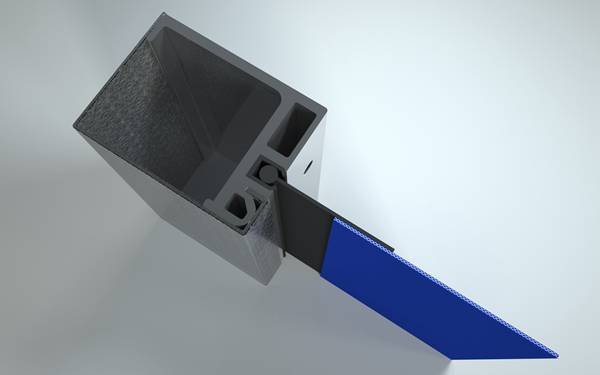
Zipper high speed doors are a specialized type of PVC high speed door featuring a zipper-style side retention system. The curtain edges engage with dedicated guide tracks to provide improved side sealing.

Compared with conventional PVC high speed doors, zipper doors are particularly suitable for industrial environments requiring greater control of airflow, dust, and separation between different production areas.
Main Features:
- Zipper-style sealing structure along both sides of the curtain.
- Reduced gaps between the curtain and guide tracks.
- Certain models feature automatic self-repairing capabilities after curtain displacement.
- Optional safety photocells, safety edges, and automatic activation sensors.
- Supports double-door interlocking, PLC communication, and automated equipment integration.
Recommended Applications: Pharmaceutical manufacturing, electronics production, food processing cleanrooms, controlled environments, and areas requiring differential pressure management.
Selection Advice: For cleanrooms, controlled manufacturing environments, and facilities requiring differential pressure control, zipper high speed doors should be given priority consideration.
For example, some cleanroom applications require a pressure differential of approximately 30–50 Pa. The door must be designed and verified according to the actual pressure differential, opening dimensions, and sealing requirements.
Not all zipper high speed doors are capable of meeting the same differential pressure requirements.
2. How to Choose Between the Five Types of High Speed Doors
Selecting an industrial high speed door requires more than comparing operating speeds and purchase prices.
The following table summarizes the main characteristics and recommended applications of the five door types.
| Door Type | Main Advantages | Recommended Applications |
|---|---|---|
| PVC High Speed Door | Fast operation, flexible configuration | Indoor workshops with minimal wind pressure |
| Spiral High Speed Door | Wind resistance, thermal insulation, rigid structure | Outdoor entrances and external factory openings |
| High Speed Aluminum Roller Shutter | Compact design, optional high speed drive | Openings preferably smaller than 10 m² |
| Insulated PVC High Speed Door | Double-layer insulation, reduced heat transfer | Temperature-controlled workshops around 10–20°C |
| Zipper High Speed Door | Improved side sealing | Cleanrooms and controlled environments |
Industrial buyers should evaluate site conditions, wind pressure, operating frequency, temperature requirements, sealing performance, and automation needs before selecting a door type.
3. How to Choose an Experienced High Speed Door Manufacturer in China
China has a large number of high speed door manufacturers, but manufacturing capabilities, materials, product configurations, and engineering experience can vary significantly.
MEGODOOR recommends that industrial buyers focus on the following factors.
3.1 Choose Manufacturers With Relevant Project Experience
Industrial high speed doors are typically configured according to specific site conditions. Different applications require different structural and electrical designs.
For example, a cleanroom high speed door has different design priorities from an outdoor wind-resistant door. Similarly, a high speed door integrated with an AGV system requires different electrical controls from a standard personnel access door.
Buyers should therefore request actual project references involving similar applications, including information about door structures, operating methods, and environmental conditions.
For industrial products, real installation cases, technical documentation, and long-term operating feedback are generally more valuable than promotional claims alone.
3.2 Verify the Accuracy of Technical Specifications
Some suppliers may provide inaccurate technical parameters or quotations that do not fully match their advertised product configurations.
Common issues include:
- Claiming high wind resistance ratings without appropriate verification.
- Presenting the maximum motor speed as the actual operating speed of the complete door.
- Promising specific thermal insulation performance without supporting test results.
- Confusing electrical component certifications with complete door certification.
- Overlooking how door dimensions and operating frequency affect motor life and reliability.
Buyers should ask suppliers to clearly specify the product model, curtain thickness, frame material, motor brand, safety devices, and relevant technical documentation.
Purchasing decisions should not rely solely on advertised performance figures.
3.3 Evaluate Manufacturing Processes and Electrical Control Systems
Industrial high speed doors are often expected to operate frequently over extended periods.
Their long-term performance depends on factors such as frame construction, transmission mechanisms, welding quality, surface treatment, electrical control systems, and safety protection devices.
Where possible, buyers should evaluate the manufacturer’s production equipment, quality inspection procedures, and completed projects to gain a better understanding of its manufacturing and service capabilities.
4. What Information Should Buyers Provide Before Requesting a High Speed Door Quotation?
To receive an accurate quotation and suitable product recommendation, industrial buyers should provide the following technical information in advance.
4.1 Door Dimensions and Quantity
Specify the opening width, opening height, required quantity, and available installation space.
Important measurements include:
- Available headroom above the opening.
- Installation space on the motor side.
- Available clearance on the non-motor side.
4.2 Power Supply and Voltage
Confirm the available electrical supply, including voltage and frequency.
Common requirements may include:
- 110V
- 220V
- 380V
- 440V
- 480V
- 50Hz or 60Hz
The manufacturer should verify the compatibility of the proposed drive and control system with the available power supply.
4.3 Door Materials and Structural Requirements
Specify the required PVC curtain thickness, insulated panel thickness, frame material, surface treatment, and whether stainless steel construction is necessary.
4.4 Opening and Control Methods
Select suitable activation methods based on site requirements, such as:
- Radar sensors
- Induction loops
- Push buttons
- Pull cords
- Infrared sensors
4.5 Automation and Equipment Integration
If the door needs to communicate with AGVs, RGVs, PLCs, or other production equipment, the following information should be confirmed in advance:
- Communication interface and protocol.
- Input and output signal requirements.
- Door opening and closing logic.
- Safety interlocking requirements.
4.6 Special Operating Conditions
Provide information about any special environmental requirements, including:
- Wind pressure and outdoor exposure.
- Indoor and outdoor temperature differences.
- Cleanroom classification.
- Differential pressure requirements.
- Frequent opening and closing cycles.
- Other application-specific operating conditions.
The more clearly these requirements are defined, the easier it is for the manufacturer to provide a suitable technical solution and reduce the risk of modifications during installation.
5. What Certifications Are Required for High Speed Doors Exported to the USA and Europe?
For industrial high speed doors supplied to overseas markets, buyers must consider not only mechanical construction but also electrical safety, voltage compatibility, control systems, and applicable local regulations.
5.1 High Speed Doors Exported to the USA: Understanding UL Certification Requirements
High speed doors exported to the United States may be subject to different electrical safety and certification requirements depending on the project.
Some industrial facilities may accept electrical control systems configured according to specified technical requirements.
Other projects may require control systems and electrical components with relevant UL certification or recognition documentation.
When a high speed door is installed on automated machinery and becomes part of a complete equipment assembly undergoing UL or another applicable compliance evaluation, buyers should clarify requirements for overall equipment certification, component recognition, safety circuits, and equipment integration before manufacturing begins.
Certain applications may also require:
- STO (Safe Torque Off) functionality.
- Emergency stop circuits.
- Safety photocells.
- Safety edges.
- Equipment safety interlocking.
Important: Using electrical components bearing UL marks does not mean that the complete high speed door is UL certified.
Requirements relating to UL Listed products, UL Recognized components, and field evaluations must be assessed separately according to the specific project.
Before placing an order, buyers should clarify whether all applicable electrical components must hold relevant UL certification or recognition and whether an evaluation of the complete door assembly is required.
5.2 High Speed Doors Exported to Europe: Understanding CE Compliance
Industrial high speed doors exported to the European Union should undergo the appropriate conformity assessment based on their product category, intended use, and applicable regulations.
Depending on the application, the project may require CE marking, an EU Declaration of Conformity, and relevant technical documentation.
Electrical components and safety devices should also be selected according to applicable requirements.
For high speed doors integrated with production equipment, electrical safety, safety circuits, machine integration, and risk assessment should be considered.
Important: CE compliance is not simply a matter of adding certification labels to an electrical control box or its individual components.
Compliance of the complete door assembly depends on the applicable EU legislation, product standards, risk assessments, and supporting technical documentation.
Not every electrical component requires an individual CE certificate.
Therefore, buyers should clarify at the quotation stage whether the complete door must meet applicable CE conformity requirements or whether additional project-specific documentation, electrical components, control systems, or testing are required.
6. Industrial High Speed Door Manufacturer in China – Nanjing MEGODOOR
Nanjing MEGODOOR Co., Ltd. (MEGODOOR) is a China-based industrial door manufacturer offering a range of high speed door solutions, including:
- PVC High Speed Doors
- Spiral High Speed Doors
- High Speed Aluminum Roller Shutters
- Insulated PVC High Speed Doors
- Zipper High Speed Doors
MEGODOOR has experience supplying industrial door solutions for projects in North America, Europe, Southeast Asia, and other international markets.
Based on customer requirements and site conditions, MEGODOOR can provide different door structures, voltage configurations, electrical control systems, and industrial automation integration solutions.
For overseas projects involving UL, CE, or other specific technical requirements, MEGODOOR works with customers during the technical planning stage to clarify the applicable compliance scope, electrical configuration, and required documentation.
Choosing the right high speed door is not simply about purchasing the fastest or cheapest product. It is about selecting a door designed for the actual operating environment and working with a manufacturer that can provide an appropriate technical solution supported by relevant project experience.